Mountain Property 101 February 21, 2026

HOA vs No HOA in Western NC, What Buyers Should Know

Should You Buy in an HOA or Non-HOA Community in Western North Carolina?

Buying in the Western North Carolina mountains often comes with one important question: should you choose a property in an HOA community or one without an HOA?

For some buyers, the word “HOA” signals restriction. For others, “no HOA” sounds like freedom. In the mountains, the reality is more nuanced. The decision often has less to do with paint colors and more to do with private roads, drainage, shared infrastructure, and long-term property access.

Understanding that distinction early can prevent costly surprises later.

Unlike large metro areas where HOAs are often associated with strict architectural control, many mountain HOAs exist for a much simpler reason, coordination. Road maintenance, shared infrastructure, and long-term property protection are often the primary drivers.

At Revelia Property Solutions, we help buyers evaluate HOA and non-HOA properties with clarity and context. The goal is not to label one as better than the other. The goal is alignment with your priorities and long-term plans.

Let’s break down what HOA and non-HOA living really means in Western North Carolina.


What Is an HOA in Western North Carolina?

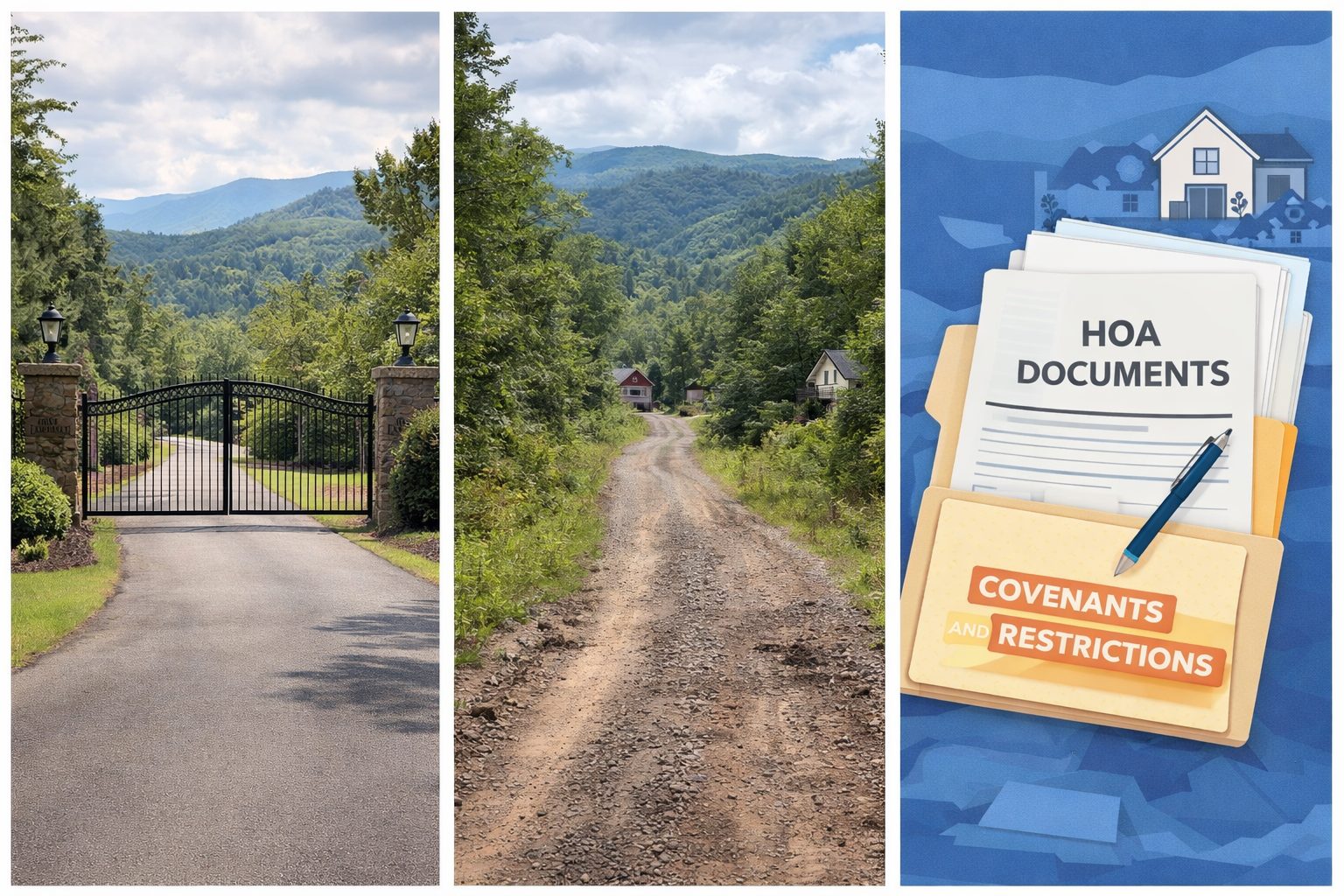
An HOA, or Homeowners Association, is a governing body within a subdivision that enforces recorded covenants and collects dues for shared responsibilities.

In Western North Carolina, HOAs are commonly found in:

• Gated mountain communities
• Planned developments
• Newer subdivisions
• Higher elevation communities with private roads

HOAs are governed in North Carolina by the North Carolina Planned Community Act, which outlines how associations operate, collect dues, and enforce restrictions.

Source: North Carolina General Statutes Chapter 47F
https://www.ncleg.gov/EnactedLegislation/Statutes/HTML/ByChapter/Chapter_47F.html

Not all HOAs are the same. Some are highly structured with architectural review boards. Others are minimal, focused primarily on road upkeep and basic covenant enforcement.


Are HOAs Common in the Western North Carolina Mountains?

Yes, but not universal.

Many mountain properties, especially older tracts and rural parcels, have no formal HOA. However, planned communities developed in the past 20 to 30 years often include associations to manage infrastructure.

In counties like Haywood, Jackson, and Buncombe, you will find a mix of:

• Formal HOA communities
• Properties with recorded deed restrictions but no active HOA
• Completely unrestricted land

Understanding which category a property falls into is part of proper due diligence.


What Do HOA Dues Typically Cover in Mountain Communities?

In Western North Carolina, HOA dues often focus on infrastructure rather than amenities.

Common inclusions:

• Private road maintenance
• Snow removal
• Gate maintenance
• Common area upkeep
• Shared well systems in some developments (Well Water in Western NC, What Buyers Should Know)
• Community signage and entrance landscaping

Unlike urban communities, many mountain HOAs do not include pools, gyms, or extensive amenities. Instead, they coordinate maintenance in terrain where shared responsibility is often necessary.

The cost of dues varies widely depending on road length, terrain, and services provided.


Are Mountain HOAs Usually Strict About Architecture?

Some are, but many are not.

Certain gated or high-end communities may have architectural review boards that regulate exterior materials, roof types, or minimum square footage. These rules are typically outlined in recorded covenants.

However, many mountain HOAs are relatively straightforward. Their primary purpose is preserving road quality and preventing uses that significantly impact neighboring properties.

Buyers should review covenants directly rather than assume restrictions based on the presence of an HOA.


Can an HOA Restrict Short-Term Rentals in Western North Carolina?

Yes. Many HOAs in Western North Carolina restrict or regulate short-term rentals.

Restrictions may include:

• Complete prohibition of rentals under a certain duration
• Minimum lease terms
• Permit or registration requirements
• Occupancy limits

It is important to distinguish between county regulations and HOA restrictions. Even if a county allows short-term rentals, an HOA may prohibit them through recorded covenants.

Conversely, a property without an HOA may still have deed restrictions limiting rental use.

Short-term rental restrictions can also influence resale dynamics. In certain mountain markets where vacation rental demand is strong, properties that prohibit STR use may attract a narrower buyer pool. This does not make them less valuable, but it can affect marketing strategy and time on market depending on current demand trends.

Conversely, communities that allow STRs may experience stronger investor interest, which can increase competition but also introduce different neighborhood dynamics. The key is understanding how rental flexibility aligns with your goals and how it may impact future resale positioning.  (Is Western North Carolina a Good Short-Term Rental Investment?)

If short-term rental flexibility is important to you, reviewing covenants before making an offer is essential.


What Happens If There Is No HOA?

No HOA means there is no governing association collecting dues or enforcing community-wide rules.

That can offer flexibility, but it also shifts responsibility to individual property owners.

In non-HOA areas, you may encounter:

• Individually maintained driveways
• Informal shared road agreements
• No coordinated snow removal
• Fewer aesthetic restrictions

This does not automatically mean fewer rules. It simply means enforcement mechanisms differ.


Who Maintains Private Roads in Non-HOA Mountain Areas?

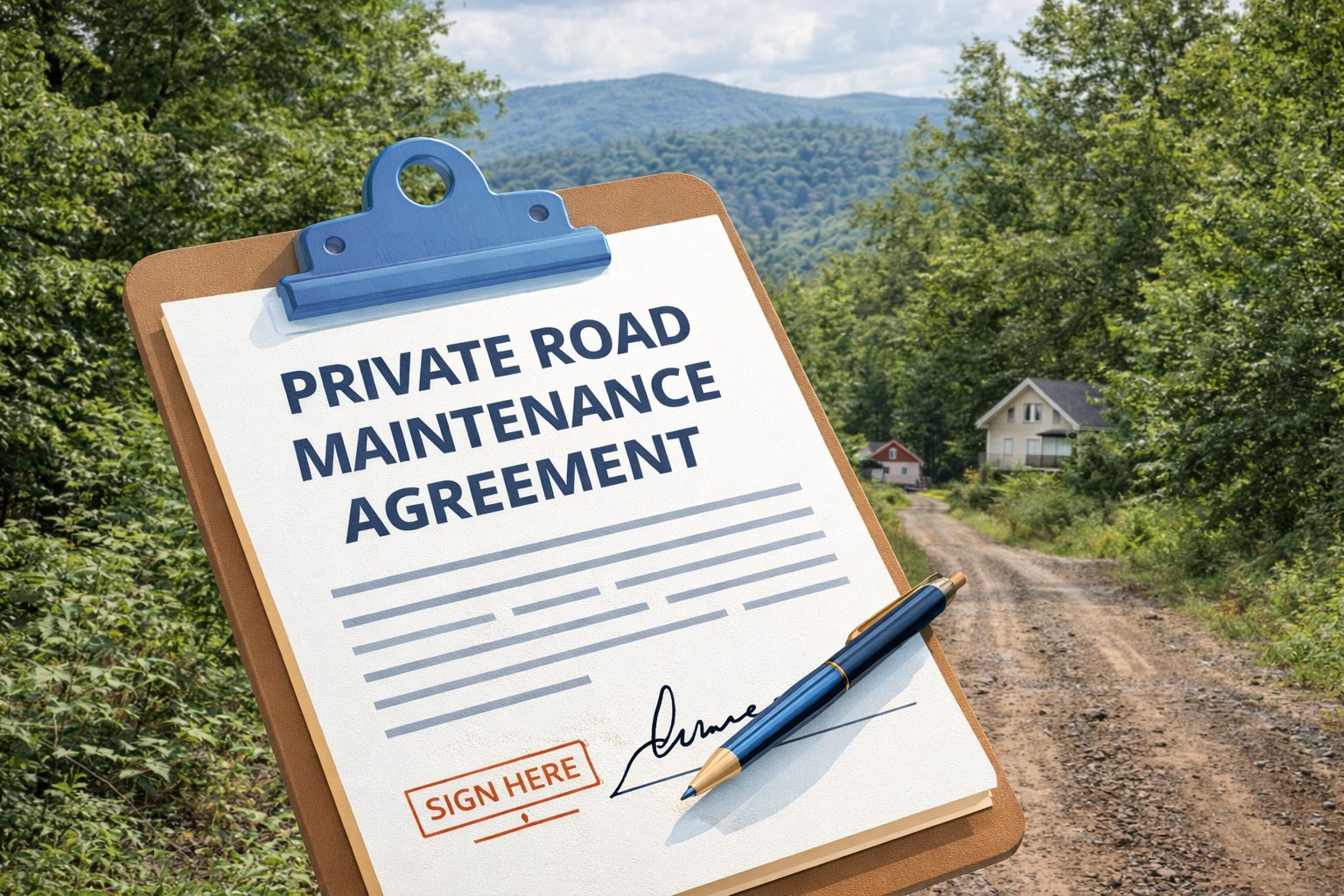
Private road maintenance without an HOA typically depends on recorded easement agreements or informal neighbor cooperation.

In some cases, there may be a Road Maintenance Agreement recorded with the property deed outlining cost-sharing responsibilities. In others, arrangements may be informal.

In mountain terrain, road grading, gravel replenishment, culvert repair, and drainage control are critical. Without coordinated maintenance, road quality can decline over time.

Understanding who is financially responsible for road upkeep is one of the most important due diligence steps in non-HOA purchases.


Can There Still Be Restrictions Without an HOA?

Yes. Recorded deed restrictions can exist even when no active HOA is present.

These restrictions may address:

• Minimum home size
• Mobile home limitations
• Commercial use restrictions
• Livestock allowances
• Subdivision limitations

Deed restrictions are attached to the property title and remain enforceable even if no association actively manages them.

Buyers should review title documents carefully.


Are Shared Wells or Septic Systems More Common in HOA Communities?

Shared infrastructure is more commonly coordinated within HOA communities, but it can exist outside them as well.

Some developments utilize shared wells or community water systems managed through the association. Others may rely on individual private wells and septic systems.

In non-HOA areas, shared wells are typically governed by recorded shared well agreements rather than association oversight.

Understanding maintenance responsibility and cost allocation is critical in either scenario.


How Do HOAs Affect Property Value in Western North Carolina?

HOAs can influence property value depending on buyer preference and community maintenance standards.

Well-maintained private roads and coordinated infrastructure often preserve access quality and long-term usability, which can positively influence marketability.

Conversely, overly restrictive covenants may narrow the buyer pool in certain segments.

In Western North Carolina, value impact is highly location-specific. Clarity and transparency matter more than the HOA label itself.


What Should Buyers Review During Due Diligence?

Buyers should review:

• Recorded covenants and restrictions
• HOA bylaws and meeting minutes
• Current dues and assessment history
• Road maintenance agreements
• Shared well or septic agreements
• Short-term rental rules
• Financial health of the association

Due diligence is about understanding structure, not reacting to assumptions.

At Revelia Property Solutions, we guide clients through these documents carefully so expectations align with reality.


Conclusion

HOA and non-HOA communities in Western North Carolina each come with advantages and responsibilities.

In the mountains, the conversation is often about infrastructure, not aesthetics. Road maintenance, snow removal, drainage, and shared systems matter just as much as flexibility.

The right choice depends on your goals, whether that is long-term residence, second-home ownership, rental use, or privacy.

Before you make an offer in a mountain subdivision or rural tract, let’s review the governing documents and infrastructure responsibilities together.

Clear understanding leads to confident ownership.


Frequently Asked Questions

Q: Are HOA fees expensive in Western North Carolina?
A: Fees vary widely depending on road length, services provided, and community size. Some mountain HOAs have modest annual dues focused solely on road maintenance.

Q: Can you negotiate HOA fees?
A: HOA dues are set by the association and generally not negotiable individually. However, buyers can factor dues into overall budgeting and negotiations.

Q: Is buying without an HOA risky in the mountains?
A: Not necessarily. It simply requires understanding road access, maintenance responsibilities, and any recorded restrictions.

Q: Do all mountain HOAs restrict short-term rentals?
A: No. Policies vary significantly. Reviewing covenants directly is the only reliable way to confirm rental allowances.

Q: Who pays if a private mountain road washes out?
A: Responsibility depends on whether the road is HOA-managed, governed by a maintenance agreement, or individually maintained. This should be clarified before closing.

Ready to Make Your Move in Western North Carolina?

We help buyers and sellers across Western North Carolina, including Haywood, Jackson, and Buncombe counties, move forward with clarity and confidence.

Jason Revelia
Call 828-342-1334 |
Email Jason

Shannon Revelia
Call 828-226-6767 |
Email Shannon

www.ReveliaPropertySolutions.com

Mountain Property 101 February 20, 2026

Flood Zones in Western NC, What Buyers Should Know

What Flood Zones Really Mean When Buying in Western North Carolina

After Hurricane Helene, many Western North Carolina buyers have new questions about flood zones and insurance, and we’re here to answer them clearly.

Flood zones are not new to the mountains, but recent storm events have increased awareness. Buyers want to know whether a property is at risk, whether flood insurance is required, and whether maps are changing. These are smart questions.

At Revelia Property Solutions, we approach flood zones the same way we approach wells, septic systems, and steep terrain. Calmly. Factually. Strategically. Our role is not to create fear, it is to create clarity.

Let’s walk through what flood zones actually mean in Western North Carolina.


What Is a Flood Zone in Western North Carolina?

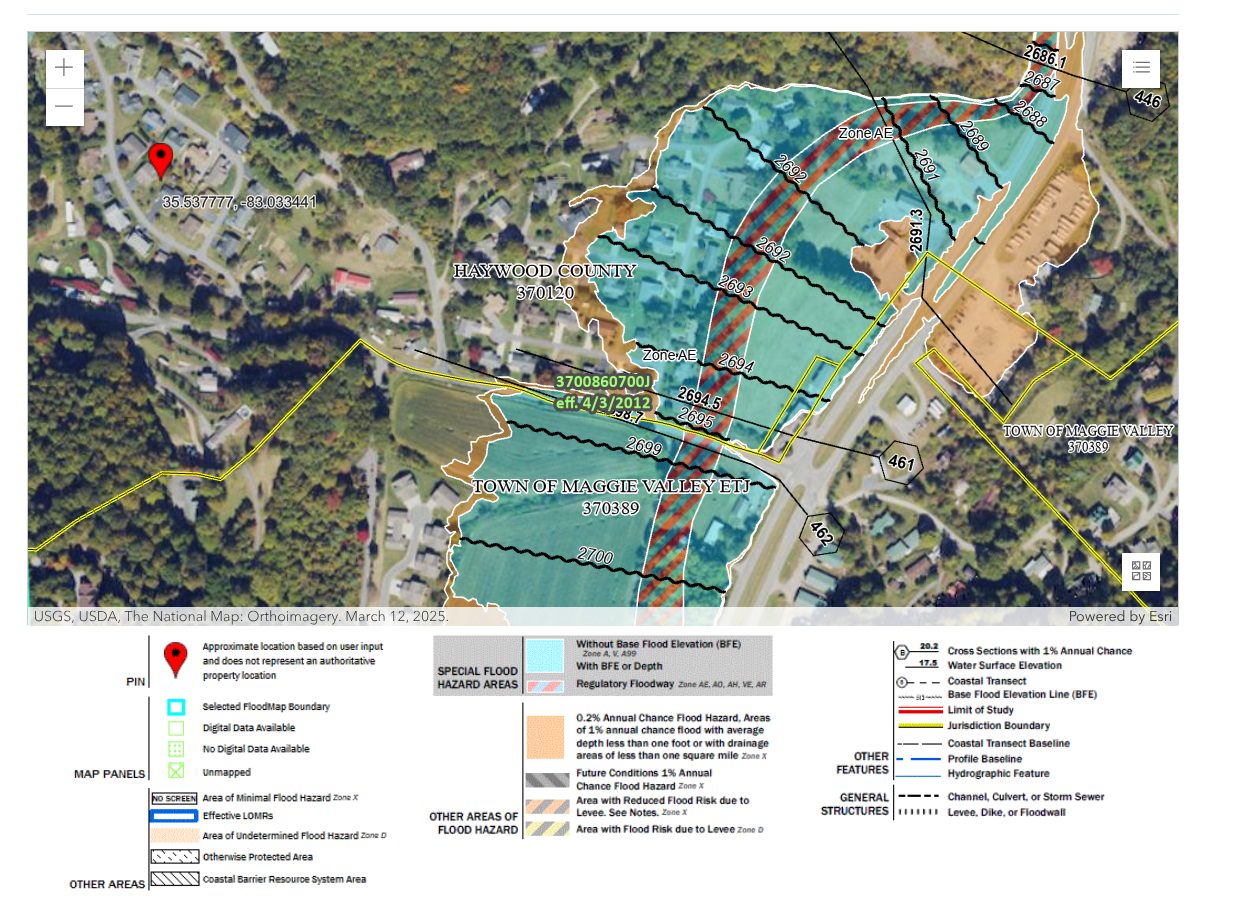
A flood zone is a geographic area defined by FEMA that reflects the statistical likelihood of flooding.

Properties are placed into categories such as Zone X, Zone AE, or Zone A based on modeling of historical rainfall, river behavior, topography, and watershed patterns. According to FEMA’s Flood Map Service Center, these designations are part of the National Flood Insurance Program’s risk modeling framework.

Source: FEMA Flood Map Service Center
https://msc.fema.gov/portal/home These designations do not predict whether a home will flood tomorrow. They indicate probability over time.

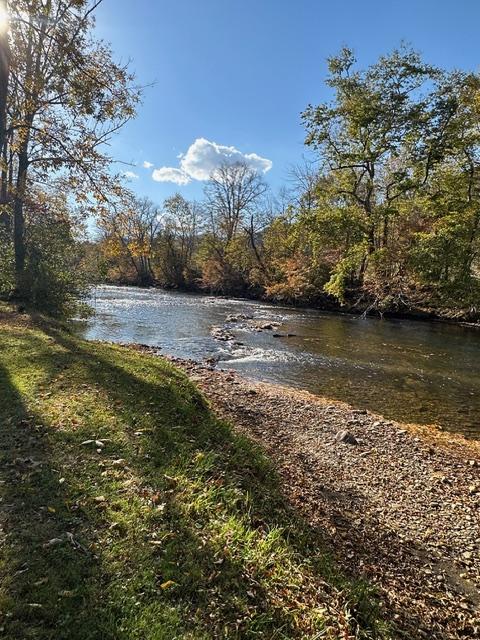
In Western North Carolina, flood zones are most commonly found:

• Along river valleys
• Near creeks and tributaries
• In lower elevation basin areas
• Adjacent to mapped floodplains

Mountain ridge properties are far less likely to fall within FEMA flood zones, but valleys in areas like Haywood County, along the Pigeon River and its tributaries, may include designated flood areas.

Flood zone does not automatically mean high danger. It means risk has been modeled.

For example- Haywood County has a great resource that allows you to search on specific addresses and get all the most recent flood zoning information.  https://readyhaywood.com/flooding/


Are Flood Maps Being Redrawn After Helene?

FEMA flood maps are periodically reviewed and updated based on new data, development patterns, and significant storm events. FEMA’s Risk Mapping, Assessment, and Planning (Risk MAP) program outlines how communities are reassessed over time to reflect updated hydrologic and topographic information.

Source: FEMA Risk MAP Program
https://www.fema.gov/flood-maps/tools-resources/risk-map

After major weather events such as Hurricane Helene, additional assessments and data collection often occur. That does not mean every property will be reclassified. Map revisions are technical, data-driven processes that can take time.

Buyers should understand that flood maps are tools. They evolve as more information becomes available. When evaluating a property, we always recommend checking the most current FEMA Flood Map Service Center data and local county GIS systems, especially in areas that experienced significant storm impact.

Being informed is not the same as being alarmed. It simply means using the latest available data.


Do You Need Flood Insurance in Western North Carolina?

Flood insurance is required by lenders when a property is located in a high-risk FEMA flood zone. Under federal law governing the National Flood Insurance Program, federally regulated lenders must require flood insurance for structures located within Special Flood Hazard Areas.

Source: National Flood Insurance Program (NFIP)
https://www.fema.gov/flood-insurance

If you are financing a home and it is designated in Zone AE or another Special Flood Hazard Area, your lender will require flood insurance before closing. This is a federal lending requirement, not a discretionary decision by the bank.

If a property is in Zone X or another low-to-moderate risk zone, flood insurance is typically not mandatory for financed buyers.

Insurance costs vary depending on elevation, coverage limits, and flood zone classification. Premiums can range widely, so obtaining a quote early in the due diligence period is essential.


When Is Flood Insurance Required by a Lender?

Flood insurance becomes mandatory when:

• The property is in a FEMA-designated Special Flood Hazard Area
• The loan is backed by a federally regulated lender
• The structure itself sits within the mapped zone

It is important to understand that land within a flood zone does not automatically trigger the requirement. The structure’s location relative to the mapped flood boundary is what matters.

Elevation certificates may also play a role in determining final premium cost.


What If You Are a Cash Buyer in a Flood Zone?

Cash buyers are not legally required to carry flood insurance.

However, choosing not to carry insurance means assuming full financial responsibility for potential flood damage. There is no lender oversight requiring coverage.

Some cash buyers elect to carry flood insurance even when it is not required. Others rely on risk tolerance, elevation positioning, and historical performance of the property.

This is not a one-size-fits-all decision. It should be evaluated based on topography, water proximity, and long-term plans.

Clear information leads to confident decisions.


Are Mountain Homes Actually at Risk of Flooding?

Western North Carolina’s terrain creates both natural protection and concentrated water flow.

Higher elevation homes on ridges generally have lower flood exposure. However, heavy rainfall can cause rapid water movement in valleys, along creeks, and near drainage corridors.

It is also important to distinguish between river flooding and surface water drainage issues. A property can be outside of a FEMA flood zone and still experience water intrusion due to grading, culverts, or stormwater management.

Flood zone designation is only one piece of the evaluation.


How Do Zillow and Realtor.com Flood Risk Scores Differ from FEMA Maps?

Online platforms such as Zillow and Realtor.com often display flood risk ratings that differ from FEMA flood zone designations.

Many of these platforms use third-party climate modeling tools, most commonly data from First Street Foundation. These models evaluate factors such as property elevation, proximity to rivers or creeks, historical flood events, rainfall data, and projected long-term climate patterns. The result is a forward-looking risk score that estimates potential flood exposure over time.

That is very different from how FEMA classifies flood zones.

FEMA flood maps are engineering-based designations used to determine whether flood insurance is required by a lender under the National Flood Insurance Program. Lenders rely on FEMA Special Flood Hazard Area designations, not online climate risk scores, when determining mandatory insurance requirements.

Because these systems measure different things, it is possible for a property to show a “moderate” or “high” flood risk score online while still being located in FEMA Zone X, where flood insurance is not required for financed buyers.

Online flood risk tools can be helpful for general awareness. However, they are screening tools, not underwriting standards. In Western North Carolina, where elevation can change dramatically within short distances, automated models may not fully reflect grading changes, drainage improvements, culverts, or site-specific topography.

Clarity comes from reviewing FEMA maps, county GIS data, elevation information, and on-the-ground conditions together.

How Do Flood Zones Affect Property Value?

Flood zones can influence buyer perception, insurance costs, and financing requirements.

Some buyers are comfortable purchasing within designated zones when pricing reflects the designation. Others prefer to avoid them entirely. Market reaction depends heavily on location and elevation details.

In areas of Haywood County and surrounding river valleys, flood-designated properties still sell regularly. Pricing strategy and transparency matter more than the label itself.

Clarity reduces stigma.


What Should Buyers Review During Due Diligence?

Buyers should review:

• Current FEMA flood map designation (via FEMA Flood Map Service Center)
• County GIS mapping, such as Haywood County GIS
• Elevation certificate if available
• Insurance quotes early in the process
• Historical disclosure statements
• Proximity to creeks, rivers, and drainage channels

Source: Haywood County GIS
https://www.haywoodcountync.gov/154/GIS

Source: North Carolina Flood Risk Information System
https://fris.nc.gov/fris/
• County GIS mapping
• Elevation certificate if available
• Insurance quotes early in the process
• Historical disclosure statements
• Proximity to creeks, rivers, and drainage channels

Due diligence is about understanding the full picture, not reacting emotionally to one data point.

At Revelia Property Solutions, we walk clients through flood mapping the same way we walk them through well logs or septic permits. Systematically. With context. Without drama.


Why Work With a Local Team When Buying Near Rivers or Creeks?

Local knowledge matters when evaluating flood risk.

Topography in Western North Carolina can change dramatically within a short distance. Two homes on the same road may have entirely different flood exposure depending on elevation and grading.

We understand the difference between mapped floodplain, functional drainage patterns, and true long-term risk. We also help buyers interpret what insurance requirements actually mean for their specific financing scenario.

Experience removes uncertainty.


Conclusion

Flood zones in Western North Carolina are not something to ignore, and they are not something to panic over.

They are data points. They are part of a larger evaluation that includes elevation, water proximity, insurance requirements, and financing structure.

After Hurricane Helene, awareness is higher. That is understandable. The key is responding with information rather than emotion.

If you are considering purchasing property near a river, creek, or valley area in Western North Carolina, let’s review the flood maps and insurance implications together before you make an offer.

Clear guidance leads to confident decisions.


Frequently Asked Questions

Q: Can a property flood even if it is not in a FEMA flood zone?
A: Yes. FEMA flood maps reflect modeled risk, but localized drainage issues or extreme weather can still cause water intrusion outside mapped zones.

Q: How much does flood insurance cost in Western NC?
A: Costs vary based on elevation, zone designation, and coverage limits. Obtaining a quote early during due diligence is the best way to understand real numbers.

Q: Can flood zones change over time?
A: Yes. FEMA periodically updates flood maps based on new data and storm history. Buyers should always review the most current map version.

Q: Does flood insurance cover mudslides?
A: Standard flood insurance typically covers rising water, not earth movement. Mudslides may fall under separate coverage categories depending on policy terms.

Q: Should a cash buyer carry flood insurance?
A: While not required, some cash buyers choose to carry flood insurance for risk protection. The decision depends on individual risk tolerance and property specifics.

Ready to Make Your Move in Western North Carolina?

We help buyers and sellers across Western North Carolina, including Haywood, Jackson, and Buncombe counties, move forward with clarity and confidence.

Jason Revelia
Call 828-342-1334 |
Email Jason

Shannon Revelia
Call 828-226-6767 |
Email Shannon


www.ReveliaPropertySolutions.com

Mountain Property 101 February 20, 2026

Well Water in Western NC, What Buyers Should Know

What to Know About Well Water When Buying in Western North Carolina

Well water in Western North Carolina is common, especially in mountain and rural properties. In fact, millions of North Carolina residents rely on private wells for their drinking water, according to the NC Department of Environmental Quality. If you are buying in the mountains, there is a strong chance your home will not be connected to a municipal water system.

For some buyers, that feels intimidating. Is it safe? Is it expensive? What if something goes wrong?

At Revelia Property Solutions, we walk buyers through this every week. As a husband and wife team serving Western North Carolina, with Jason’s construction background and Shannon’s deep Haywood County roots, we help clients understand not just the property, but the systems behind it.

Let’s break down what you really need to know.

Is Well Water Safe in Western North Carolina?

Yes, well water in Western North Carolina is generally safe, but it must be tested and maintained properly.

Private wells are not regulated the same way city water systems are. According to the U.S. Environmental Protection Agency, homeowners are responsible for testing and maintaining their own wells. That means safety depends on regular water testing and system upkeep.

In the mountains, water often comes from deep groundwater sources, which are naturally filtered through layers of rock and soil. That natural filtration can produce excellent quality water. However, issues such as bacteria, iron, manganese, or low pH can still occur depending on the location and geology.

The North Carolina Department of Environmental Quality recommends testing private wells at least once per year for bacteria and other contaminants. In a real estate transaction, we strongly advise testing during due diligence so buyers know exactly what they are purchasing.

Source: NC DEQ Private Well Program
https://deq.nc.gov/about/divisions/water-resources/water-supply/private-well-program

How Does a Private Well System Work in the NC Mountains?

A private well system pulls groundwater from beneath your property using a drilled well and pump system.

Most mountain wells in Western North Carolina are drilled wells, not shallow dug wells. A licensed well contractor drills deep into bedrock to access a reliable aquifer. A submersible pump moves water into the home, where it is stored in a pressure tank that regulates flow.

Inside the home, you may also see:

• A pressure tank
• A water filtration system
• A water softener, if needed
• A UV purification system in some homes

These systems are straightforward, but buyers unfamiliar with them sometimes assume they are complicated. In reality, they are mechanical systems similar to HVAC or septic, they just require periodic inspection and maintenance.

How Deep Are Wells in Western North Carolina?

Well depth in Western North Carolina can vary significantly depending on elevation and geology.

In Haywood County and surrounding mountain areas, wells often range from 200 to 600 feet deep, though some may be shallower or deeper. Mountain terrain requires drilling into fractured bedrock to access consistent water flow.

According to the U.S. Geological Survey, groundwater in mountainous regions often travels through cracks in rock formations, making proper drilling location critical.

Source: USGS Groundwater Information
https://www.usgs.gov/special-topics/water-science-school/science/groundwater

This is where local experience matters. Knowing typical well depths and local soil conditions helps buyers better understand risk and long-term reliability.

In mountain construction, drilling location can matter just as much as depth. Jason has seen wells drilled just yards apart produce completely different yields because of how water moves through fractured bedrock. Reviewing well logs, pump age, and local drilling history during due diligence can reveal far more than depth alone. That kind of evaluation helps buyers move forward with clarity instead of guesswork.

What Does It Cost to Maintain a Well in Western NC?

Annual well maintenance costs are typically low, but repairs can be more significant if a pump fails.

Typical annual costs may include:

• Water testing, often $100 to $300
• Filter replacements, depending on system
• Occasional servicing of pressure tanks

A well pump replacement can range from a few thousand dollars depending on depth and equipment. However, most pumps last 8 to 15 years, sometimes longer with proper care.

Compared to monthly municipal water bills, many homeowners find well ownership cost-effective over time. There is no recurring water bill, only maintenance.

Source: EPA Private Well Maintenance
https://www.epa.gov/privatewells

What Are the Pros and Cons of Well Water vs City Water?

Well water offers independence and potentially lower monthly costs, but it requires personal responsibility.

Pros of well water:

• No monthly water bill
• Control over filtration and quality
• No dependency on municipal infrastructure
• Often excellent taste due to natural filtration

Cons of well water:

• Homeowner responsible for testing
• Potential repair costs
• Requires due diligence during purchase

Most mountain buyers quickly realize that well water is simply part of rural living. It is not a defect. It is a system.

One important difference between well water and city water becomes obvious during power outages. Private wells rely on an electric pump, which means if the power goes out, water flow typically stops unless the home has a generator. In contrast, many municipal water systems continue operating during outages because they use gravity-fed systems or backup infrastructure.

In Western North Carolina, where storms and winter weather can occasionally impact power, some homeowners choose to install whole-house generators. With a properly sized generator, a private well system continues operating normally. Buyers who value uninterrupted water access during outages should factor backup power into their planning.

What Should Buyers Test During Due Diligence in Western North Carolina?

Buyers should always test well water during due diligence.

Standard testing often includes:

• Total coliform bacteria
• E. coli
• Nitrates
• pH levels
• Iron and manganese

Depending on location, additional testing may be recommended.

The North Carolina Cooperative Extension encourages routine testing for safety and peace of mind.

Source: NC Cooperative Extension Well Water Testing
https://content.ces.ncsu.edu/well-water-testing-and-treatment

This is not where you cut corners. Testing is relatively inexpensive compared to the cost of uncertainty.

What Is a Shared Well and How Does It Work in Western North Carolina?

A shared well is a private well that supplies water to more than one home, typically governed by a recorded shared well agreement.

Shared wells are fairly common in mountain communities where neighboring properties were originally part of a larger tract of land. Instead of drilling multiple wells, one well may serve two or more homes.

When evaluating a property with a shared well, buyers should review:

• The recorded shared well agreement
• Maintenance responsibilities
• Cost-sharing terms for repairs or pump replacement
• Easements for access and utility lines

Lenders may have specific requirements for shared wells, including minimum distance from septic systems and written agreements outlining usage rights. Proper documentation is critical.

Shared wells are not inherently problematic, but clarity matters. We always advise reviewing agreements carefully during due diligence so there are no surprises about repair costs or access rights later.

Can You Finance or Insure a Home with Well Water?

Yes, homes with private wells can be financed and insured.

Most conventional, FHA, and VA loans allow properties with private wells, provided the water source meets safety standards. Some loan types may require water testing documentation.

Insurance companies typically do not penalize homes solely because they use well water. However, proper documentation and system condition matter.

This is where preparation helps. When buyers understand requirements upfront, there are fewer surprises.

Conclusion

Well water in Western North Carolina is not something to fear, it is something to understand.

With proper testing, maintenance, and professional guidance, a private well can provide clean, reliable water for decades. Mountain living comes with unique systems, but those systems are manageable when you know what questions to ask.

If you are considering buying a home in Western North Carolina and want clarity around well water, septic systems, or other mountain-specific details, we would be happy to help.

Reach out to Revelia Property Solutions before you make an offer. We will walk through the property together so you can move forward with confidence.

Frequently Asked Questions

Q: Does well water run out in Western North Carolina?
A: Most properly drilled mountain wells provide consistent water flow year-round. Drought conditions can impact shallow wells, but deep drilled wells in Western North Carolina are typically reliable when installed correctly.

Q: How often should well water be tested in NC?
A: The North Carolina Department of Environmental Quality recommends testing at least once per year for bacteria and contaminants. Testing during a real estate transaction is strongly recommended.

Q: Is well water hard in Haywood County?
A: Water hardness varies by location. Some areas experience mineral content such as iron or manganese. A water softener or filtration system can address most issues effectively.

Q: Can a well fail inspection during a home purchase?
A: Yes. If bacteria or contamination is found, remediation may be required before closing. That is why testing during due diligence is essential.

Q: Who pays for well testing in a real estate transaction?
A: It depends on negotiations. In many cases, buyers pay for testing as part of inspections, but terms can vary.

Sources

NC Department of Environmental Quality Private Well Program
https://deq.nc.gov/about/divisions/water-resources/water-supply/private-well-program

U.S. Environmental Protection Agency Private Wells
https://www.epa.gov/privatewells

U.S. Geological Survey Groundwater Information
https://www.usgs.gov/special-topics/water-science-school/science/groundwater

NC Cooperative Extension Well Water Testing
https://content.ces.ncsu.edu/well-water-testing-and-treatment

Ready to Make Your Move in Western North Carolina?

We help buyers and sellers across Western North Carolina, including Haywood, Jackson, and Buncombe counties, move forward with clarity and confidence.

Jason Revelia
Call 828-342-1334 |
Email Jason

Shannon Revelia
Call 828-226-6767 |
Email Shannon

www.ReveliaPropertySolutions.com

Market Insights February 16, 2026

Is Western North Carolina a Good Short-Term Rental Investment?

Is Western North Carolina Still a Smart Short-Term Rental Investment?

Short term rental investment in Western North Carolina continues to attract buyers from across the country. From scenic mountain views to year round tourism, the region offers strong appeal for both vacationers and property owners.

But here is the important truth: not every property performs well, and not every investor is prepared for the operational realities of mountain rentals.

Across Haywood County, Jackson County, and Buncombe County, opportunities exist. Success depends on understanding regulations, infrastructure, accessibility, and true operating costs before purchasing.

At Revelia Property Solutions, we approach investment property decisions with a practical mindset. As long term rental owners ourselves, we understand cash flow analysis, maintenance realities, and the importance of evaluating risk before committing to a purchase.

Let’s break down what investors should know.


Why Western North Carolina Continues to Attract Short-Term Rental Investors

Western North Carolina offers consistent tourism drivers.

The Blue Ridge Parkway, Great Smoky Mountains National Park, fall foliage season, summer outdoor recreation, Cataloochee ski resort, Cherokee casino and the Asheville food and arts scene create multi season demand.

Unlike strictly beach markets with sharp off seasons, mountain markets experience seasonal shifts but maintain tourism throughout much of the year.

Vacation travelers seek: • Mountain views • Privacy • Hot tubs and outdoor space • Proximity to hiking and attractions • Cozy cabin aesthetics

This demand base creates strong potential for well positioned properties.


How Haywood, Jackson, and Buncombe Counties Differ for STR Owners

While often grouped together, these counties operate differently.

Haywood County

Maggie Valley and Waynesville attract consistent vacation traffic. Many areas of Haywood County allow short term rentals, but septic capacity, road access, and elevation heavily impact performance.  Haywood County often attracts longer stays as it acts as a natural hub centric to other areas.

Properties with easy year round access often outperform more remote ridge locations.

Jackson County

Jackson County offers scenic and private mountain settings. Regulations may vary by municipality and zoning district. Inventory is more limited, which can support higher nightly rates in certain areas.

Buncombe County

Buncombe County, particularly around Asheville, has experienced more regulatory oversight. Some areas require permits or restrict certain types of short term rentals. However, demand remains strong near Asheville attractions.

Investors must verify zoning and county regulations before making an offer.


What Local Regulations You Must Understand Before Buying

Regulation varies by county and sometimes by municipality.

Investors should confirm: • Zoning designation • Permit requirements • Occupancy limits • Parking requirements • HOA restrictions • Septic permit bedroom count

Septic capacity directly impacts legal occupancy. If a system is permitted for three bedrooms, advertising as four bedrooms may create compliance issues.

Regulations evolve. Buyers should confirm current guidelines with the appropriate county offices prior to closing.


What Occupancy Rates and Revenue Look Like in Western North Carolina

Mountain cabin occupancy varies significantly based on location, property quality, and management.

General market ranges show: • Occupancy between approximately 45 percent and 70 percent annually • Average daily rates often ranging from 175 to 450 dollars per night depending on size, view, and season

For example:

A well located two bedroom cabin with moderate views might average 55 percent occupancy at 225 dollars per night.

A three bedroom property with strong views and upgraded amenities could average 60 to 65 percent occupancy at 300 to 350 dollars per night.

Premium four bedroom properties in prime tourism corridors may exceed those ranges in peak seasons.

These are market based examples. Individual performance depends heavily on management quality, guest experience, pricing strategy, and accessibility.


What Makes a Mountain Cabin Profitable

Not every cabin performs equally.

Key profitability drivers include: • Long range or layered mountain views • Reliable year round road access • Manageable driveway grade • Updated interiors • Outdoor amenities such as hot tubs or fire pits • Strong photography and listing optimization • Professional cleaning and guest communication systems

Infrastructure matters. Properties with difficult winter access or limited parking often experience booking hesitation.  Covered parking and ease of access can also come in to play as many festivals in the area cater to motorcycles and specialty cars.


The Operational Realities Many Beginner Investors Overlook

Owning a short term rental is not passive income without systems in place.

Beginner investors often underestimate: • Cleaning crew reliability • Turnover timing between guests • Guest communication expectations • Maintenance response speed • Emergency plumbing or HVAC issues • Managing remotely from out of state

Even experienced investors can be surprised by mountain specific challenges such as weather related access, septic system strain during high occupancy, and increased wear from vacation use.

Hiring a property manager reduces hands on workload but impacts net income. Self management increases margin but requires time and availability.

The math must be realistic.


How Infrastructure Impacts Rental Performance

Mountain infrastructure directly affects guest satisfaction.

Driveway steepness impacts winter access. Gravel roads can affect guest comfort. Poor drainage may create maintenance issues.

These are not cosmetic concerns. They influence reviews, repeat bookings, and long term performance.

A beautiful cabin that is difficult to access may generate strong summer income but struggle in winter months.

Infrastructure evaluation should be part of every investment analysis.


When a Short-Term Rental Does Not Make Sense

Short term rentals are not always the best use of a property.

Situations where STR may not align include: • Strict HOA limitations • Limited road access • Oversupply in micro markets • Owners seeking truly passive income without involvement

In some cases, long term rental or personal use may be more appropriate.


How Revelia Property Solutions Helps Investors Evaluate Opportunities

We approach investment purchases with a balanced lens.

Our process includes: • Verifying zoning and local rules • Reviewing infrastructure and access • Evaluating comparable rental positioning • Discussing realistic revenue expectations • Considering exit strategy and resale potential

Because we own and operate rental property ourselves, we understand that successful investing requires clear analysis, not optimism alone.

If you are considering a short term rental in Western North Carolina, we would be happy to help you evaluate the opportunity before you commit.


Frequently Asked Questions

Are short term rentals allowed in Haywood County?
Many areas allow them, but zoning and local regulations should always be verified prior to purchase.

Does Buncombe County restrict Airbnb properties?
Certain areas require permits or have restrictions. Always confirm with county or municipal offices.

How much can a Maggie Valley cabin earn annually?
Revenue varies widely. Occupancy, nightly rate, seasonality, and management quality all influence performance.

Should I self manage or hire a property manager?
Self management increases potential profit but requires time and responsiveness. Professional management reduces workload but lowers net income.

Do I need special insurance for a vacation rental?
Yes. Short term rental properties typically require specialized insurance coverage beyond standard homeowner policies.


Conclusion

Western North Carolina continues to offer strong short term rental potential. However, success depends on choosing the right property, understanding regulations, and planning for operational realities.

A thoughtful evaluation process helps investors move forward with confidence rather than speculation.

If you are exploring short term rental opportunities in Western North Carolina, contact Revelia Property Solutions today and let’s analyze the opportunity together before you buy.

Ready to Make Your Move in Western North Carolina?

We help buyers and sellers across Western North Carolina, including Haywood, Jackson, and Buncombe counties, move forward with clarity and confidence.

Jason Revelia
Call 828-342-1334 |
Email Jason

Shannon Revelia
Call 828-226-6767 |
Email Shannon

www.ReveliaPropertySolutions.com

Buying & Selling in NC February 15, 2026

How to Price Your Home in Western North Carolina

How to Price Your Home Strategically in Western North Carolina

If you are preparing to sell in Western North Carolina, pricing your home correctly is the single most important decision you will make.

Recent market data across Western North Carolina shows moderate appreciation overall, but significant variation by county, elevation, price range, and property type. Median home values in Buncombe County have hovered in the mid $400,000 range, Jackson County trends slightly higher in certain communities, and Haywood County often sits in the upper $300,000 to low $400,000 range depending on location and property style.  Prices then vary significantly on either side of those medians depending on factors specific to the home.

That variation is exactly why pricing strategy matters.

At Revelia Property Solutions, we do not guess at pricing. We build a strategic positioning plan based on data, buyer behavior, property condition, and hyper local market patterns across Haywood, Jackson, and Buncombe counties.

Let’s walk through what that means for you.


Why Pricing Strategy Matters in Western North Carolina

In Western North Carolina, the market is not uniform.

A mountain cabin in Maggie Valley behaves differently than a downtown Waynesville craftsman. A luxury view home in Buncombe County competes in a different buyer pool than a family home in Clyde.

Buyers today are highly informed. They are comparing your home against recent comparable sales, current active listings, and price reductions. If your home enters the market overpriced, it risks sitting. And when a property sits, buyers begin to question why.

The first two weeks on the market are critical. That is when exposure is highest and serious buyers are watching.


How the Western North Carolina Market Differs by County

Western North Carolina includes diverse micro markets. Understanding county level dynamics is essential.

Haywood County

Haywood County offers a mix of primary residences, mountain view properties, and vacation homes. Median sale prices often fall in the upper $300,000 to low $400,000 range depending on location. Homes here frequently sell close to list price when positioned correctly.

Neighborhoods around Waynesville, Maggie Valley, and Lake Junaluska each behave differently. Elevation, view, and accessibility all influence value.

Jackson County

Jackson County includes both primary residences and higher end mountain properties. Certain communities command premium pricing due to privacy, acreage, or long range views. Pricing must account for limited comparable inventory in some segments.

Buncombe County

Buncombe County, anchored by Asheville, often experiences stronger pricing pressure due to demand and limited inventory. Median values commonly sit in the mid $400,000 range and above depending on neighborhood.

Urban proximity, walkability, and renovation level play major roles in pricing strategy.

Each county requires its own evaluation. There is no one size fits all formula.


Why Overpricing Hurts More Than Most Sellers Realize

Overpricing does not create negotiating power. It creates hesitation.

Most buyers search within defined price brackets. If your home is priced above where it truly belongs, it may miss the correct buyer pool entirely.

Additionally, properties that linger often require price reductions later. And reductions rarely generate the same urgency as a strong launch price.

We often remind sellers: the market determines value, not hope.

Strategic pricing creates momentum. Momentum creates leverage.


How Buyer Psychology Impacts Listing Performance

Buyers in Western North Carolina are highly sensitive to perceived value.

If a home appears well positioned compared to similar properties in Haywood, Jackson, or Buncombe counties, buyers act quickly.

If it feels overpriced compared to nearby alternatives, buyers wait.

This is particularly true in mountain markets where relocation buyers compare properties across county lines. Someone considering Waynesville may also evaluate homes in Asheville or Sylva. Your pricing must hold up against broader regional competition.


What Data Really Matters When Pricing a Mountain Home

Not all data carries equal weight.

We evaluate:
• Recently sold comparable properties
• Active competition
• Price per square foot trends
• Days on market patterns
• Seasonal timing
• Property condition and upgrades
• Accessibility factors such as driveway grade and infrastructure

Mountain homes introduce additional variables such as view premium, elevation, privacy, and land usability.

Online automated valuations often miss these nuances. Algorithms cannot fully account for long range views, septic capacity, or unique lot positioning.

Pricing requires interpretation, not just numbers.


How We Build a Strategic Pricing Plan at Revelia Property Solutions

Our pricing process is structured and deliberate.

First, we conduct a detailed comparable analysis within your immediate area. Then we widen the lens to evaluate broader Western North Carolina competition across Haywood, Jackson, and Buncombe counties.

We also consider buyer demand trends, showing activity, and property positioning.

We leverage advanced tools to analyze listing performance, buyer engagement patterns, and marketing reach. That allows us to position your home where serious buyers are already searching.

Technology supports the strategy. Experience guides it.


When to Adjust Price and When to Hold Firm

Pricing is not static. It is strategic.

If showing activity is strong but offers are not materializing, small adjustments may be appropriate. If activity is weak, a larger repositioning may be necessary.

On the other hand, if your property is receiving strong engagement and aligned feedback, patience can be wise.

We monitor performance closely during the first weeks on market and advise based on real buyer response, not emotion.


Frequently Asked Questions

What happens if I price my home too high?
An overpriced home may sit on the market longer, reducing buyer urgency and potentially leading to later price reductions.

How long should I wait before reducing price?
That depends on showing activity and feedback. If traffic is low during the first few weeks, early adjustment may prevent long term stagnation.

Do online home value estimates work in Western North Carolina?
Automated estimates provide a general range but often miss mountain specific variables such as views, access, and infrastructure.

Does seasonality affect pricing in Haywood County?
Yes. Spring and early summer typically bring stronger buyer activity, while winter markets may require sharper positioning.

How are short term rental properties priced differently?
Income potential, occupancy history, and guest accessibility all influence valuation in addition to comparable sales.


Conclusion

Pricing your home in Western North Carolina is not about choosing the highest possible number. It is about positioning your property strategically within the right buyer pool.

With deep experience across Western North Carolina, Revelia Property Solutions combines data analysis, contractor level property insight, and advanced marketing tools to help you launch with confidence.

If you are considering selling in Western North Carolina, contact Revelia Property Solutions today and let’s build a pricing strategy that attracts serious buyers from day one.

Ready to Make Your Move in Western North Carolina?

We help buyers and sellers across Western North Carolina, including Haywood, Jackson, and Buncombe counties, move forward with clarity and confidence.

Jason Revelia
Call 828-342-1334 |
Email Jason

Shannon Revelia
Call 828-226-6767 |
Email Shannon

www.ReveliaPropertySolutions.com

Mountain Property 101 February 15, 2026

Steep Driveways in Western North Carolina Homes: What Buyers Should Know

What to Know About Steep Driveways When Buying a Mountain Home in Western North Carolina

Steep driveways in Western North Carolina are extremely common, especially in mountain neighborhoods where homes are built to capture views and maximize elevation. For many buyers relocating to Western North Carolina, the first showing with a sharply sloped driveway can feel intimidating.

The truth is this: a steep driveway is not automatically a problem. But it does require evaluation.

In communities like Maggie Valley, Waynesville outskirts, and rural parts of Jackson County, driveway grade, surface material, drainage, and winter exposure all matter. As a licensed general contractor, Jason evaluates driveway construction differently than most agents, and together at Revelia Property Solutions we help buyers assess accessibility with clarity before making an offer.

Let’s break down what you should really know.


How Common Are Steep Driveways in Western North Carolina Mountain Homes?

Steep driveways are the norm in many mountain properties across Western North Carolina.

Because homes are often built on slopes to take advantage of long range views, elevation changes are unavoidable. Unlike flat subdivisions in urban areas, mountain development requires creative grading and site planning.

In Maggie Valley, for example, many properties sit on ridgelines or carved hillside lots. The same applies to parts of Waynesville and rural Jackson County.

The presence of a slope is not the issue. The question is whether that slope is designed and constructed properly.


When Is a Steep Driveway a Problem and When Is It Not?

A steep driveway becomes a concern when grade, surface, and drainage are not engineered correctly.

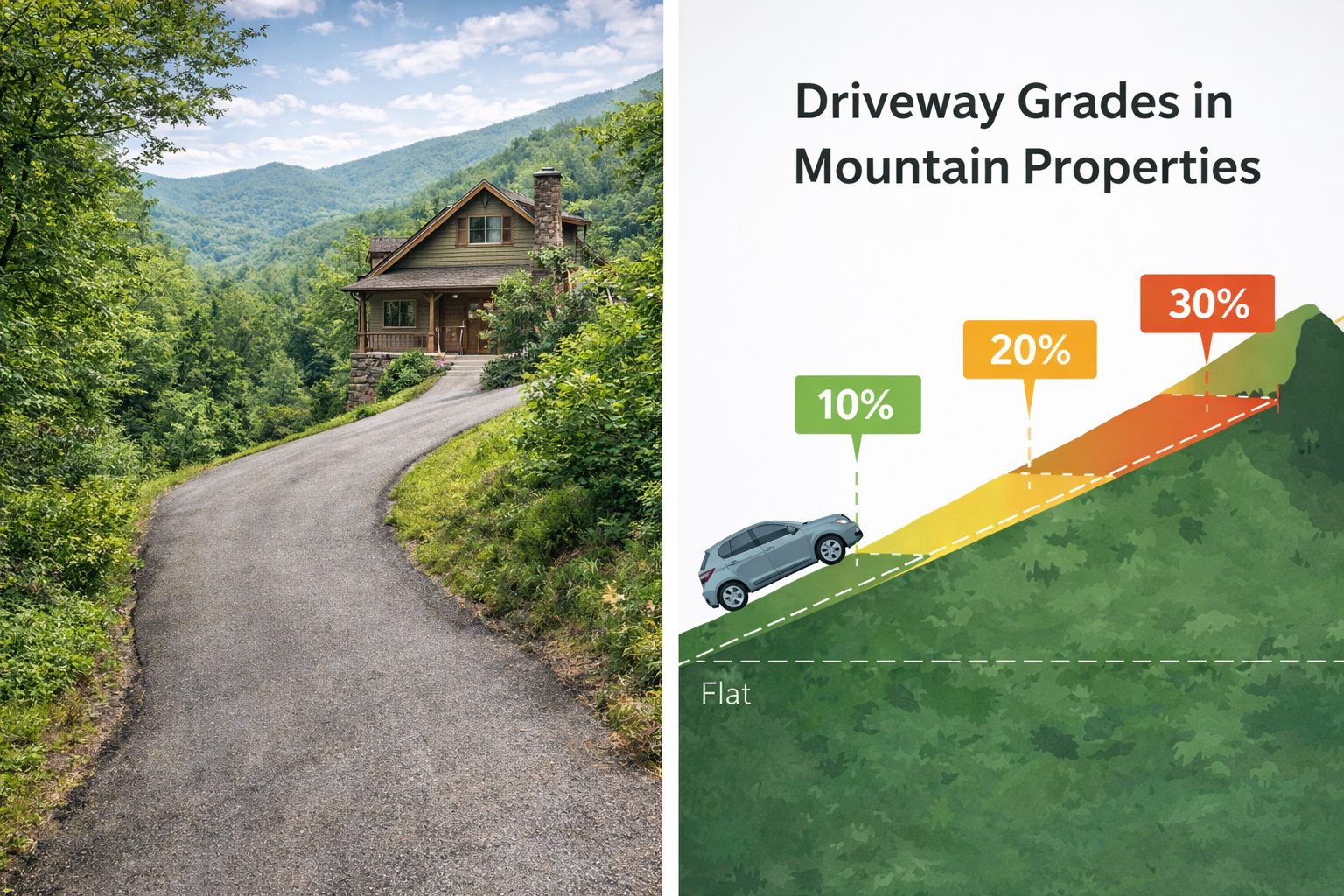
Residential driveway grades typically range from 8 percent to 15 percent. Once you move beyond 15 percent, traction and safety become more dependent on surface material and maintenance.

A 12 percent paved driveway with proper drainage may perform better than a 10 percent gravel driveway with erosion issues.

Here is what matters most: • Grade percentage • Surface type • Sun exposure for ice melt • Drainage control • Length of incline • Turn radius

We often tell buyers that steep does not mean unsafe. Poor design is the real risk.


How Winter Weather Impacts Mountain Property Access in Western North Carolina

Winter access in western North Carolina depends on elevation and exposure.

Lower elevations near Waynesville may experience limited snow events, while higher elevations in Maggie Valley and surrounding ridges can see heavier snowfall and ice accumulation.

According to North Carolina climate data, mountain regions experience variable snowfall depending on altitude and storm patterns. Even light snow can create challenges on shaded slopes.

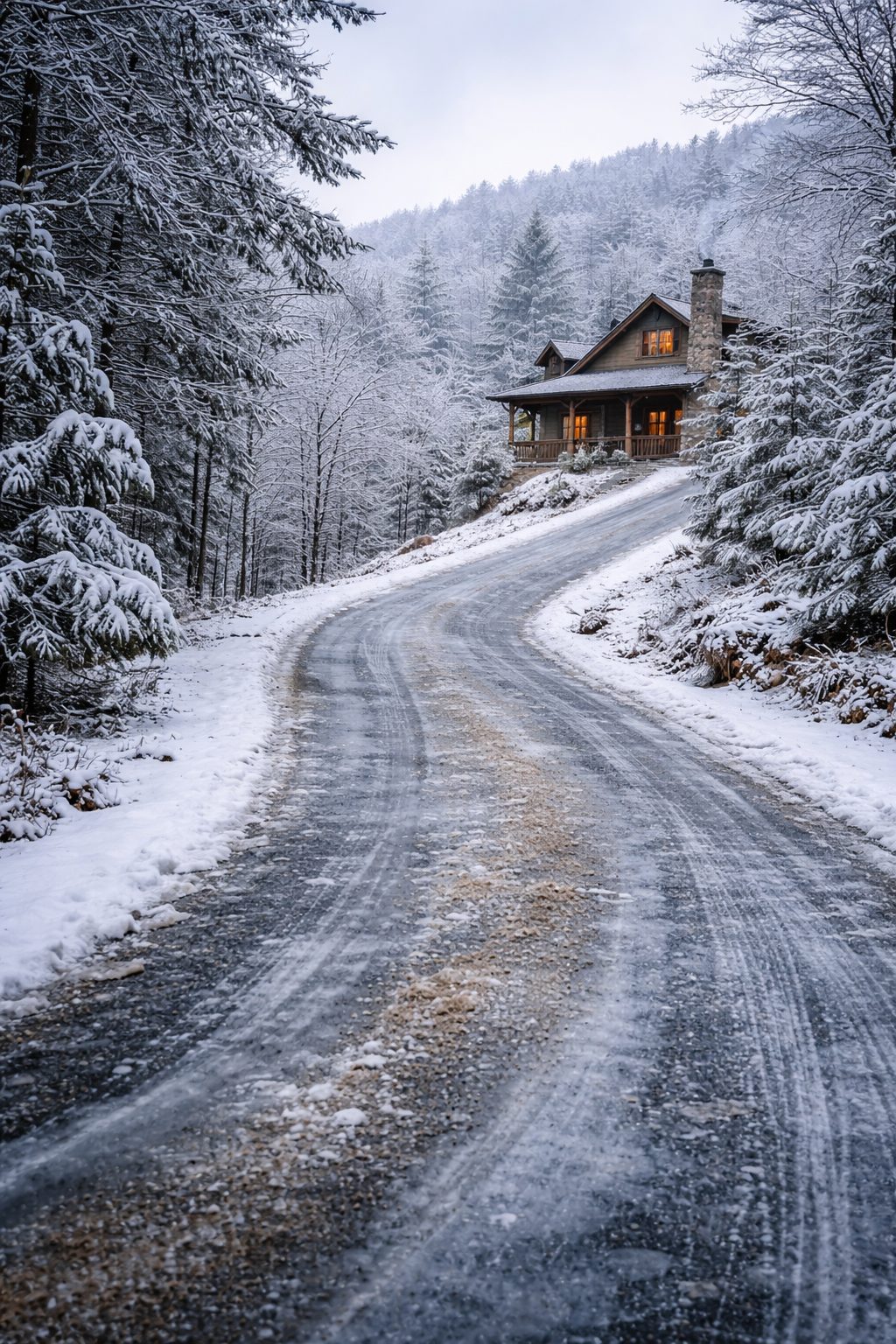
Driveways that face north and receive limited sunlight tend to retain ice longer. Long shaded stretches combined with higher grades create traction challenges.

Buyers frequently ask if four wheel drive or all wheel drive is required. In many mountain neighborhoods, it is strongly recommended during winter months.


What a Licensed General Contractor Looks for in Driveway Construction

A contractor evaluates far more than just the steepness of a driveway.

Jason looks at: • Base preparation and compaction • Gravel depth or asphalt thickness • Retaining wall integrity • Culvert placement • Water diversion systems • Evidence of washout or erosion

Improper drainage is the most common long term issue we see. Mountain rainfall can be intense, and without proper grading, water can undermine driveway stability over time.

This is where construction experience makes a difference. A driveway may look fine on a sunny showing day, but signs of erosion or inadequate runoff control tell a deeper story.


Are Gravel Driveways Riskier Than Paved in Maggie Valley and Surrounding Areas?

Gravel driveways are not automatically worse, but they require more maintenance.

Gravel provides flexibility and is often more affordable initially. However, steep gravel driveways can develop ruts, washouts, and loose aggregate issues after heavy rain.

Paved driveways generally offer better traction when properly installed, but they can become slick if water pools or if ice forms.

Concrete offers durability but is less forgiving in freeze thaw cycles if not installed correctly.

Material choice must be evaluated alongside slope and drainage.


How Driveway Grade Impacts Resale and Short Term Rental Potential

Accessibility influences resale value and rental performance.

Some buyers are comfortable with steep access. Others are not. If a driveway feels intimidating, it can reduce your buyer pool.

For short term rentals in Maggie Valley and Haywood County, accessibility affects guest satisfaction. Guests unfamiliar with mountain terrain may be hesitant to book properties with extreme slopes.  It may also result in lots of panicked calls from renters in getting up or down the driveway.

We advise investors to consider: • Guest vehicle types • Winter maintenance responsibility • Turnaround space for delivery vehicles • Emergency access considerations

A manageable slope with good design rarely hurts value. An extreme, poorly designed driveway can limit appeal.


Can You Improve a Steep Driveway After Buying the Home?

In many cases, improvements are possible.

Options may include: • Adding switchbacks • Installing retaining walls • Improving drainage systems • Regrading sections • Paving over gravel

However, improvements depend on lot size, environmental restrictions, and cost feasibility. Some steep properties have limited room for redesign.

Before purchasing, it is important to understand whether the current driveway is the only realistic configuration.


How Revelia Property Solutions Evaluates Accessibility Before You Buy

We approach mountain properties with a practical mindset.

Our evaluation process includes: • Reviewing slope visually and discussing grade estimates • Evaluating surface material condition • Identifying drainage red flags • Discussing winter exposure and elevation • Factoring accessibility into negotiation strategy

Because we live and work in Haywood County and surrounding Western North Carolina communities, we understand what is normal and what is problematic.

Steep does not equal bad. It simply requires informed evaluation.


Frequently Asked Questions

What grade is too steep for a residential driveway?
Driveways above 15 percent grade can become challenging, especially in winter conditions. Proper surface and drainage design can mitigate some risks.

Do you need four wheel drive/all wheel drive in Western North Carolina?
Four wheel drive/all wheel drive is strongly recommended for higher elevation mountain properties during winter months, particularly in elevated mountain and ridge communities.

How often does snow impact mountain driveways in Western North Carolina?
Snow frequency varies by elevation. Higher elevations experience more frequent accumulation, while lower elevations may see limited events each winter.

Can you add switchbacks to reduce slope?
Possibly, depending on lot size and grading constraints. Engineering review is often required.

Will a steep driveway hurt resale value?
Not necessarily. Poorly designed or intimidating driveways may limit buyer interest, but well constructed slopes are common and accepted in mountain markets.


Conclusion

Steep driveways can be part of mountain living in Western North Carolina. The goal is not to avoid them entirely. The goal is to understand them.

With the right evaluation process, you can confidently purchase a mountain home that balances views, accessibility, and long term value.

At Revelia Property Solutions, we combine contractor insight with local market expertise to help you move forward with clarity.

If you are considering a mountain home in Haywood County, Jackson County, or Buncombe County, contact Revelia Property Solutions today and let’s evaluate the property with confidence before you commit.

Ready to Make Your Move in Western North Carolina?

We help buyers and sellers across Western North Carolina, including Haywood, Jackson, and Buncombe counties, move forward with clarity and confidence.

Jason Revelia
Call 828-342-1334 |
Email Jason

Shannon Revelia
Call 828-226-6767 |
Email Shannon

www.ReveliaPropertySolutions.com

Mountain Property 101 February 14, 2026

Septic Systems in WNC Mountains: What Buyers Must Know

What to Know About Septic Systems When Buying a Home in Western North Carolina

Septic systems in western North Carolina are extremely common, especially in mountain properties outside municipal sewer lines. In fact, many buyers relocating to Western North Carolina are surprised to learn that public sewer access is the exception rather than the rule in rural and semi rural areas.

According to the U.S. Environmental Protection Agency, more than 20 percent of U.S. households rely on septic systems, and that percentage is significantly higher in rural mountain regions like ours. Source: https://www.epa.gov/septic

If you are buying in Haywood County, Jackson County, or surrounding areas, understanding how septic systems work and what to look for is not optional. It is essential. And this is where our contractor level insight makes a difference.

At Revelia Property Solutions, Jason brings over 20 years of hands on construction experience as a licensed general contractor, and together we have owned primary residences, vacation rentals, and long term rentals across Western North Carolina. We evaluate septic systems with real world experience, not surface level advice.

Let’s walk through what you need to know before you buy.


How Common Are Septic Systems in Haywood County and Western North Carolina?

Septic systems are the norm in Haywood County and many surrounding mountain communities.

Outside of towns like Waynesville and parts of Canton, most properties rely on private septic systems because installing municipal sewer infrastructure across mountainous terrain is expensive and logistically complex. According to the North Carolina Department of Health and Human Services, local environmental health departments regulate on site wastewater systems across the state. Source: https://ehs.dph.ncdhhs.gov/oswp/

In areas like Maggie Valley, Clyde, Lake Junaluska outskirts, and rural Jackson County, septic systems are extremely common. The same applies to much of Macon County and Rutherford County in rural settings.

If you are relocating from a metropolitan area with city sewer, this is often one of the biggest learning curves.


How Do Septic Systems Work in Mountain Properties?

A septic system collects wastewater from the home, separates solids from liquids in a tank, and then disperses treated liquid into a drain field where it filters through soil.

The system typically includes: • A septic tank • Distribution box • Drain field or leach field • Soil absorption area

In mountain properties, slope and soil composition matter significantly. Western North Carolina often has clay heavy soils, rocky terrain, and steep grades. These factors affect how wastewater disperses and how well the system performs long term.

The North Carolina Cooperative Extension explains that soil type and drainage capacity determine whether a site can support a conventional system or requires an engineered alternative. Source: https://content.ces.ncsu.edu/septic-systems-and-their-maintenance

This is where contractor insight matters. We look at grading, water flow patterns, and proximity to retaining walls or driveways. Most buyers do not think about how mountain runoff impacts a drain field.

Septic Tank diagram. Septic system and drain field scheme.


What Red Flags Should Buyers Watch for During a Showing?

Buyers should watch for surface indicators that may suggest septic stress or failure.

Here are common warning signs: • Standing water near the drain field • Strong sewage odors outside • Lush bright green grass in one isolated area • Slow draining sinks or toilets • Evidence of recent soil disturbance over the field

Many of these issues were touched on in our Red Flags Buyers Miss When Touring Homes in Western North Carolina blog (https://reveliapropertysolutions.com/2026/02/10/red-flags-buyers-miss-when-touring-homes-in-western-north-carolina ) but septic deserves deeper attention.

As a licensed general contractor, Jason often looks for grading issues that channel water toward the drain field. Mountain properties are especially vulnerable to improper runoff management.

If water is consistently saturating the soil above the field, system longevity decreases.


Do You Need a Septic Inspection in Haywood County?

Yes, a septic inspection is strongly recommended and often required depending on loan type.

FHA and VA loans frequently require certification that the system is functioning properly. FHA guidance can be reviewed through HUD documentation here: https://www.hud.gov/program_offices/housing/sfh/handbook_4000-1

Beyond loan requirements, a septic inspection provides: • Tank condition evaluation • Baffle inspection • Pumping history review • Drain field performance assessment

Haywood County Environmental Health oversees permitting and records. Buyers can request septic permit history through the county. Source: https://www.haywoodcountync.gov/150/Environmental-Health

We help our buyers obtain records early in the process so there are no surprises after due diligence deadlines.


How Much Does It Cost to Repair or Replace a Septic System in Western North Carolina?

Septic replacement costs in Western North Carolina range greatly depending on system type, soil conditions, and site accessibility (base ballpark  is typically around $10,000).

Engineered systems required for difficult soil or slope conditions can exceed that range. Factors that impact cost include: • Tank size • System design • Excavation complexity • Permit fees • Drain field length

The Environmental Protection Agency notes that proper maintenance significantly extends system life, often 20 to 40 years depending on care. Source: https://www.epa.gov/septic/septic-systems-overview

Understanding replacement risk affects negotiation strategy. If a system is near end of life, that should factor into pricing discussions.

Installing a septic system


How Septic Capacity Impacts Short Term Rental Potential

Septic permit capacity directly limits legal bedroom count.

If a septic permit is for three bedrooms, you cannot legally advertise or operate as a four bedroom short term rental without upgrading the system. This is critical in areas like Maggie Valley and parts of Haywood County where vacation rentals are common.

Investors often overlook this detail. The septic permit dictates occupancy, not the number of rooms with beds.

We review septic permits with our investor clients before they make an offer. It is far better to confirm capacity upfront than discover limitations after closing.


What a Licensed General Contractor Notices That Most Buyers Miss

A contractor evaluates the entire ecosystem around the septic system, not just the tank.

Jason looks for: • Drainage flow patterns • Soil erosion near the field • Driveway placement over lines • Additions built without updated permits • Retaining walls altering water direction

Mountain construction is complex. A system that technically works today could be compromised by improper grading or surface water issues tomorrow.

This is part of what we mean by buying with eyes wide open.


How Revelia Property Solutions Helps You Evaluate Septic Systems With Confidence

We guide buyers through a structured evaluation process that includes permit review, contractor perspective, and inspection coordination.

Our approach includes: • Pulling septic records early • Reviewing bedroom count versus permit capacity • Coordinating specialized inspections • Evaluating grading and runoff patterns • Factoring system age into negotiation strategy

Because we live, work, and invest in Haywood County and surrounding communities, we understand the realities of mountain infrastructure. We are not just helping you buy a house. We are helping you make a sound long term decision.


Frequently Asked Questions

How long does a septic system last in North Carolina? Most septic systems last between 20 and 40 years depending on soil conditions, maintenance, and usage. Regular pumping and proper water management significantly extend lifespan.

Are septic inspections required for FHA or VA loans? Often yes. Many FHA and VA loans require documentation that the septic system is functioning properly before closing.

Can you increase septic capacity in Haywood County? Possibly, but it depends on soil suitability and lot size. Environmental Health must approve any expansion, and some lots cannot support additional capacity.

Who regulates septic systems in Western North Carolina? County Environmental Health departments regulate septic permitting and compliance under North Carolina Department of Health guidelines.

What happens if there is no recorded septic permit? If no permit exists, further investigation is required. In some cases, systems were installed before digital record keeping. In others, unpermitted installations can create legal and resale challenges.


Conclusion

Buying a home with a septic system in Haywood County is normal. Ignoring how that system functions is not.

With the right evaluation process, septic ownership is manageable and predictable. Without it, repairs can be expensive and stressful.

At Revelia Property Solutions, we combine contractor insight with local real estate expertise to help you move forward confidently.

Ready to make a smart move in Haywood County or surrounding Western North Carolina communities? Contact Revelia Property Solutions today and let’s evaluate your next home with clarity and confidence.


Ready to Make Your Move in Western North Carolina?

We help buyers and sellers across Western North Carolina, including Haywood, Jackson, and Buncombe counties, move forward with clarity and confidence.

Jason Revelia
Call 828-342-1334 |
Email Jason

Shannon Revelia
Call 828-226-6767 |
Email Shannon

www.ReveliaPropertySolutions.com

Mountain Communities & Lifestyle February 13, 2026

Living in Maggie Valley NC: A Buyer’s Guide

Is Maggie Valley NC the Right Place to Buy a Home? A Local Guide

Living in Maggie Valley, NC appeals to buyers for a simple reason, it feels like the mountains people picture when they imagine Western North Carolina.

Wide valley views, ski slopes in the winter, elk grazing in nearby fields, and decades of family vacations have shaped Maggie Valley’s identity. But beyond the tourism and nostalgia, Maggie Valley is also a real community with year-round residents who call it home.

For buyers, the key question is not just whether Maggie Valley is beautiful. It is whether it fits your lifestyle, your goals, and how you plan to use the property.

Why Is Maggie Valley One of the Most Recognized Mountain Towns in Western North Carolina?

Maggie Valley is widely recognized because it built its reputation around mountain tourism and outdoor recreation.

With fewer than 2,000 full-time residents, it remains small in population but large in visibility. Generations of families visited for ski trips, summer vacations, and roadside attractions that defined the golden era of mountain travel.   If you picture a 1960s motor court town…you have a good idea of what driving the corridor of Maggie is like.

That visibility continues to influence real estate demand today, especially among second-home buyers and those seeking short-term rental opportunities.

What Is Everyday Life Like in Maggie Valley?

Everyday life in Maggie Valley feels quieter than many people expect.

While the town experiences seasonal tourism, full-time residents enjoy a slower rhythm outside peak travel times. Locals gather at small businesses, attend community events, and spend time outdoors year-round.  If you are a fan of festivals…Maggie Valley brings a wide assortment for everyone to enjoy ( https://www.maggievalleync.gov/event-category/event-and-festival-schedules/ )

Unlike larger towns, Maggie Valley does not have the same commercial density as Waynesville, which means residents often travel there for broader services, medical offices, and additional shopping.

How Has Tourism Shaped Maggie Valley Over the Years?

Tourism has shaped Maggie Valley’s identity from the beginning.

Cataloochee Ski Area, opened in 1961, remains one of the Southeast’s most recognized ski destinations. Cataloochee Ranch, perched above the valley, has long offered mountain lodging and horseback experiences.

Ghost Town in the Sky, which opened in 1961, became the town’s most iconic attraction. The Wild West–themed amusement park drew families from across the region and defined Maggie Valley for decades. Though closed for years, Ghost Town remains a powerful nostalgic symbol that still influences how people view the town today.

That history matters because it continues to shape buyer expectations and tourism patterns.

Is Maggie Valley a Good Place for a Second Home or Short-Term Rental?

Maggie Valley can be an attractive location for second homes and vacation rentals, but it requires careful evaluation.

Its long-standing tourism appeal creates rental demand, especially during ski season and summer travel months. However, buyers should understand zoning rules, short-term rental regulations, and property management considerations before purchasing solely for investment.  We can help you navigate that.

A balanced approach considers both rental potential and personal enjoyment.

What Types of Homes Do Buyers Find in Maggie Valley?

Homes in Maggie Valley range from vintage chalets to newer construction tucked into ridgelines.

Buyers commonly encounter:

  • Classic A-frame cabins
  • Ridgetop homes with expansive views
  • Valley-floor properties with easier access
  • Mountain homes built on steep grades

Elevation, driveway access, drainage, and long-term maintenance play a significant role in how a property performs over time.

How Does Maggie Valley Compare to Waynesville?

Maggie Valley differs from Waynesville primarily in pace and purpose.

Waynesville offers more year-round commercial activity and walkability, while Maggie Valley leans more heavily into recreation and tourism. Buyers seeking a quieter setting with mountain views often gravitate toward Maggie Valley, while those wanting convenience and broader services may prefer Waynesville.

Many buyers explore both before deciding…and in reality…they are only separated by less than 10 miles…so you can easily enjoy one while living in the other.

How Local Insight Makes a Difference When Buying in Maggie Valley

Local insight matters because mountain property comes with nuances.

Understanding drainage patterns, access roads, and how tourism affects specific neighborhoods helps buyers avoid surprises and choose confidently.

Our role is to help buyers look beyond the view and understand the full picture before making a decision. (https://reveliapropertysolutions.com/testimonials/testimonials)

Frequently Asked Questions

Is Maggie Valley good for year-round living?
Yes, many residents live in Maggie Valley full-time. However, buyers should be comfortable with a smaller commercial footprint and occasional seasonal tourism fluctuations.

Can you use homes in Maggie Valley as vacation rentals?
In many areas, yes, but regulations vary. Buyers should confirm zoning and short-term rental rules before purchasing with investment in mind.

How much snow does Maggie Valley get?
Snowfall varies by elevation. Properties at higher elevations typically receive more snow than those on the valley floor.

Are homes in Maggie Valley more affordable than Asheville?
In general, Haywood County home prices, including Maggie Valley, tend to be significantly lower than Asheville, offering buyers greater value for comparable mountain properties.

Final Thoughts

Maggie Valley is one of Western North Carolina’s most iconic mountain towns, shaped by recreation, nostalgia, and natural beauty.

For some buyers, it offers the perfect mix of lifestyle and opportunity.

Choosing wisely starts with understanding not just the scenery, but the nuances of mountain living.

Ready to Make Your Move in Western North Carolina?

We help buyers and sellers across Western North Carolina, including Haywood, Jackson, and Buncombe counties, move forward with clarity and confidence.

Jason Revelia
Call 828-342-1334 |
Email Jason

Shannon Revelia
Call 828-226-6767 |
Email Shannon

www.ReveliaPropertySolutions.com

Mountain Communities & Lifestyle February 11, 2026

Living in Waynesville NC: A Buyer’s Guide

Is Waynesville NC the Right Place for You? A Local Buyer’s Guide

Living in Waynesville NC appeals to many buyers because it offers something increasingly rare in Western North Carolina, a true sense of town life paired with mountain surroundings.

One of the biggest reasons buyers start their search here is value. Homes in Haywood County, including Waynesville, often sell for well over $150,000 less than comparable homes in Asheville, while still offering access to outdoor recreation, dining, and a strong sense of community. For many buyers, that difference changes what is possible.

As a local real estate team rooted in Haywood County, we help buyers look beyond headlines and really understand whether Waynesville fits their lifestyle, budget, and long-term goals. (Visit us at https://reveliapropertysolutions.com/testimonials/testimonials )

Why Do So Many Buyers Start Their Search in Waynesville?

Buyers start their search in Waynesville because it combines convenience, character, and community in a way few mountain towns do.

Waynesville is the county seat and the largest town in Haywood County, with a population of around 10,000. It offers medical services, shopping, dining, and events that make day-to-day life easier than in more remote areas, without feeling crowded or overdeveloped.

For buyers relocating from larger cities, Waynesville often feels like a comfortable middle ground, active but not hectic, connected but still close to nature.

What Is Everyday Life Like in Waynesville NC?

Everyday life in Waynesville is shaped by routine and rhythm with an added element of short term rental appeal.

Residents shop locally, attend seasonal festivals, and spend time outdoors year-round. It is common to see neighbors walking downtown, gathering at community events, or heading toward nearby hiking trails and waterways. (https://www.downtownwaynesville.com/events)

Unlike more tourism-driven towns, Waynesville maintains a year-round residential feel, which appeals to buyers looking for stability rather than constant turnover.

What Makes Downtown Waynesville So Appealing?

Downtown Waynesville is appealing because it feels authentic and lived-in, not curated for visitors.

Main Street features brick sidewalks, local shops, restaurants, and galleries, while the nearby Frog Level Historic District adds charm with restored warehouse buildings and creekside patios.

Festivals, parades, and community gatherings keep the downtown active throughout the year, creating a sense of place that many buyers specifically seek.

Which Communities Around Waynesville Should Buyers Know About?

Waynesville is surrounded by distinct communities, each offering a slightly different lifestyle.

Hazelwood was once its own town and is now a thriving shopping and dining area with easy access to downtown.

Saunook offers a quieter valley setting just outside town, appealing to buyers who want space without feeling remote.

Dellwood connects Waynesville to Maggie Valley and continues to grow with residential and commercial development.

Lake Junaluska is a lakeside community that has evolved into a full-time residential area, known for walking paths, views, and a slower pace of life.

Balsam, located at higher elevation near the Blue Ridge Parkway, offers cooler temperatures, historic inns, and a distinct mountain feel while still being tied to Waynesville for daily needs.

Understanding these differences is key to finding the right fit within the broader Waynesville area.

How Does Waynesville Compare to Maggie Valley, Clyde, and Canton?

Waynesville differs from nearby towns in both pace and function.

Compared to Maggie Valley, Waynesville is less tourism-driven and more residential, making it better suited for full-time living.

Compared to Clyde, Waynesville offers more amenities, walkability, and commercial activity.

Compared to Canton, Waynesville has a more established downtown and a broader mix of housing options, though Canton often offers lower price points and larger lots.

Many buyers explore all four towns before deciding, and the right choice often comes down to lifestyle priorities rather than price alone.

What Types of Homes Do Buyers Find in Waynesville?

Homes in Waynesville range from historic properties near downtown to newer construction in surrounding communities.

Buyers will find:

  • Older homes with character and established neighborhoods
  • Mid-century and ranch-style homes
  • Newer builds in developing corridors
  • Condos and townhomes near Lake Junaluska and downtown

Construction quality, lot characteristics, and long-term maintenance considerations vary widely, which is why understanding the specifics of each property matters.

Who Is Waynesville a Great Fit For, and Who Might Look Elsewhere?

Waynesville is a great fit for buyers who value walkability (if close to downtown), community events, and convenience.

It often appeals to professionals, retirees, and families who want access to services without the pace or pricing of larger markets.

You can also find complete seclusion, large acreage, or heavy short term rental exposure in pockets as well as in neighboring Haywood County towns.

What Should Buyers Consider Before Choosing Waynesville?

Before choosing Waynesville, buyers should consider how close they want to be to downtown, their tolerance for traffic during peak seasons, and how different neighborhoods function day to day.

It is also important to understand how terrain, drainage, and construction styles vary across the area, especially when comparing homes built decades apart.

Local insight helps buyers understand not just what a home looks like, but how it will live over time.

How Local Knowledge Helps Buyers Choose the Right Neighborhood

Local knowledge matters because no two parts of Waynesville feel the same.

Knowing which streets see more activity, which valleys hold moisture, or which areas offer the best long-term livability helps buyers make confident decisions.

Our goal is to help buyers choose a home and a location that truly fits, not just one that looks good on paper.

Frequently Asked Questions

Is Waynesville a good place to retire?
Yes. Many retirees choose Waynesville for its medical access, walkability, and slower pace compared to larger cities, while still enjoying mountain surroundings.

Is Waynesville walkable?
Downtown Waynesville and Lake Junaluska are among the most walkable areas, while other communities are more car-dependent.

How does Waynesville compare to Asheville?
Waynesville offers a smaller-town feel with significantly lower home prices, while still providing access to dining, arts, and outdoor recreation.

Are home prices higher in Waynesville than other Haywood County towns?
Prices vary by neighborhood, but Waynesville generally sits in the middle of the Haywood County market, offering a balance of value and amenities.

Final Thoughts

Waynesville is often the starting point for buyers exploring Haywood County, and for good reason.

Understanding how it compares to nearby towns, how its communities differ, and how homes perform long term allows buyers to move forward with clarity.

Finding the right place to live starts with understanding the place itself.

Ready to Make Your Move in Western North Carolina?

We help buyers and sellers across Western North Carolina, including Haywood, Jackson, and Buncombe counties, move forward with clarity and confidence.

Jason Revelia
Call 828-342-1334 |
Email Jason

Shannon Revelia
Call 828-226-6767 |
Email Shannon


www.ReveliaPropertySolutions.com

Mountain Property 101 February 10, 2026

Red Flags Buyers Miss When Touring Homes in Western North Carolina

What Red Flags Buyers Often Miss During Home Showings in Western North Carolina

Touring homes in the mountains of Western North Carolina is exciting, but that excitement is exactly why important red flags can be easy to miss.

It is easy to walk into a showing focused on layout, views, and how the home feels. Experienced agents walk in looking at how the home functions, how it handles water, how it was built, and how it is likely to perform over time.

When buyers tour homes with us, the goal is simple. We want you to see the home with your eyes wide open so you can make a confident decision, not an emotional one.

Why Do Buyers Miss Red Flags During Home Showings?

Buyers miss red flags during showings because emotion naturally takes the lead.  These mountains are beautiful…it is easy to spend your time looking off the deck at the view instead of looking at construction details.

When a home feels right, it is easy to overlook subtle signs that something may need further evaluation. Add in time pressure, competition, or beautiful staging, and small concerns often get mentally filed away or ignored.

This is completely normal. The key is having someone with you who knows when to pause, look closer, and ask the right questions before moving on.

What Does It Mean to Look at a Home With “Eyes Wide Open”?

Looking at a home with eyes wide open means evaluating what you see and what you do not see.

It means paying attention to patterns, not just isolated details. One crack or one stain may not mean much. Multiple clues pointing to the same issue often do.

This approach does not mean assuming the worst. It means understanding the home clearly so surprises do not show up after closing.

What Exterior Red Flags Do Buyers Commonly Overlook?

Exterior red flags are often missed because buyers focus on views and curb appeal instead of performance.

Some common things buyers overlook include:

  • Water flowing toward the home instead of away from it
  • Downspouts that discharge too close to the foundation
  • Cracks or separation in foundation walls or retaining walls
  • Driveways or walkways pulling away from the structure

Western North Carolina is actually classified as a “temperate rain forest”…so water management is one of the most important long-term factors in how a home holds up.

What Interior Warning Signs Are Easy to Miss?

Interior warning signs are easy to miss because fresh paint and finishes draw attention.

Buyers often overlook doors that stick, floors that slope slightly, or cracks that repeat in multiple rooms. These details may be minor, but together they can point to movement or moisture issues.

It is also important to notice odors, humidity, or rooms that feel noticeably different from the rest of the house.

What Crawl Space and Foundation Issues Do Buyers Rarely Notice?

Crawl space and foundation issues are rarely noticed because buyers often do not see them at all.

Access panels may be hidden, blocked, or difficult to reach during a showing. When visible, signs like standing water, heavy moisture, sagging insulation, or makeshift supports deserve attention.

In mountain environments, crawl space conditions often tell you more about a home than any updated kitchen ever will.

How Can Fresh Renovations Sometimes Hide Problems?

Fresh renovations can hide problems when cosmetic updates are used to cover, not correct, underlying issues.

New flooring over uneven surfaces, newly finished basement spaces, or fresh drywall patches can sometimes signal previous water or structural concerns.

Renovations are not a bad thing. The key is understanding what was updated, why it was updated, and whether the underlying issue was truly addressed.

Why Do Mountain Homes Require a Different Way of Looking?

Mountain homes require a different way of looking because terrain, weather, and access affect construction long term.

Steep slopes, heavy rain, and limited access can amplify small construction mistakes over time. Drainage, retaining systems, and foundation design matter more here than in flatter regions.

A home that performs well in the mountains was usually designed and maintained with these realities in mind.

How Does Touring Homes With an Experienced Team Change What You See?

Touring homes with an experienced team changes what you see because you are not evaluating alone.

We help buyers slow down, notice patterns, and understand which concerns are manageable and which deserve deeper evaluation. The goal is clarity, not fear.

Seeing a home clearly before making an offer leads to better decisions, stronger negotiations, and far fewer regrets.

Reach Out!

Buying a home in Western North Carolina should feel exciting and confident, not uncertain.

When you tour homes with eyes wide open, you understand what you are buying, what questions to ask, and what truly matters long term.

If you want experienced guidance while touring homes, or simply want help seeing past the surface, we are always happy to walk through the process with you.

Frequently Asked Questions

Should agents point out concerns during a showing or wait for the inspection?
It is always helpful to note concerns early. Some issues affect whether a home is worth pursuing at all, while others can be evaluated more closely during inspection.

Are cosmetic updates a bad sign when buying a home?
Not necessarily. Cosmetic updates are common, but buyers should understand whether updates were made for style or to address underlying issues.

How can buyers stay objective when they love a house?
Bringing a neutral perspective helps. Slowing down, asking questions, and touring with experienced guidance keeps emotion and logic balanced.

Is it normal to feel unsure after touring homes?
Yes. Uncertainty is often a sign that you are thinking carefully. The right guidance can turn uncertainty into confidence.

Ready to Make Your Move in Western North Carolina?

We help buyers and sellers across Western North Carolina, including Haywood, Jackson, and Buncombe counties, move forward with clarity and confidence.

Jason Revelia
Call 828-342-1334 |
Email Jason

Shannon Revelia
Call 828-226-6767 |
Email Shannon
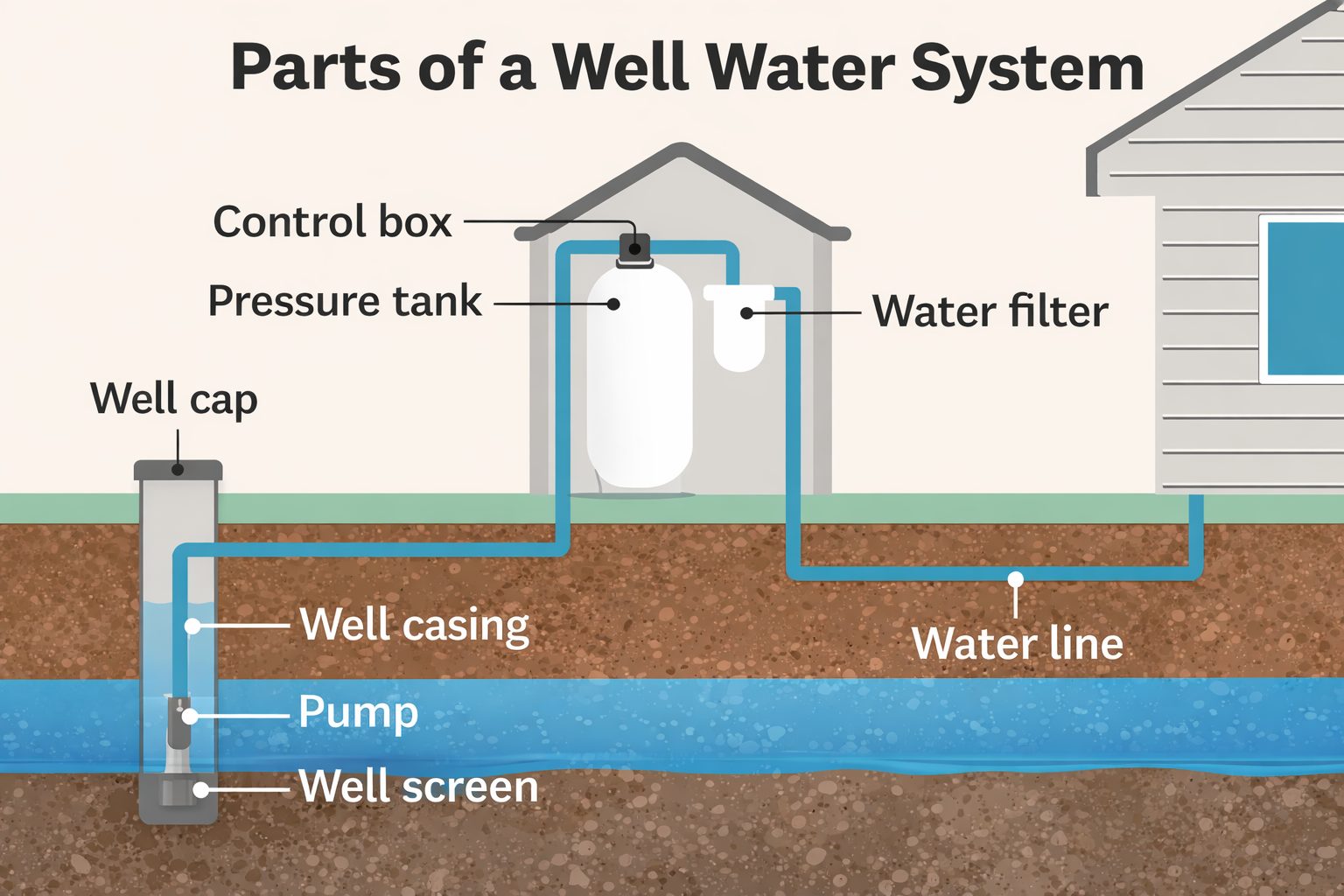

www.ReveliaPropertySolutions.com