
 Facebook
 X
X
 Pinterest
 Copy Link
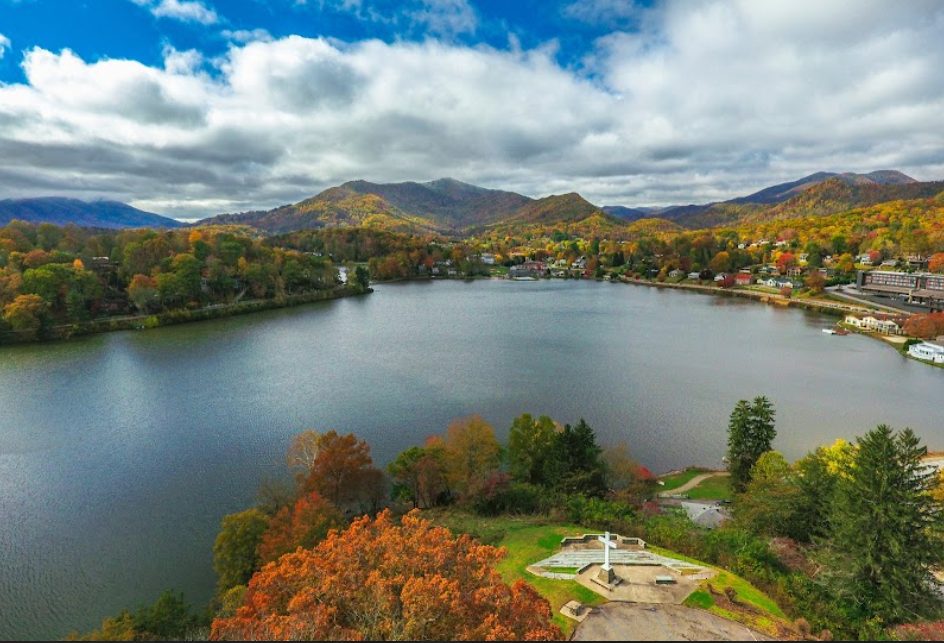
Why Lake Junaluska Is One of Haywood County’s Most Loved Places
If you spend enough time in Haywood County, you will eventually find yourself circling Lake Junaluska.
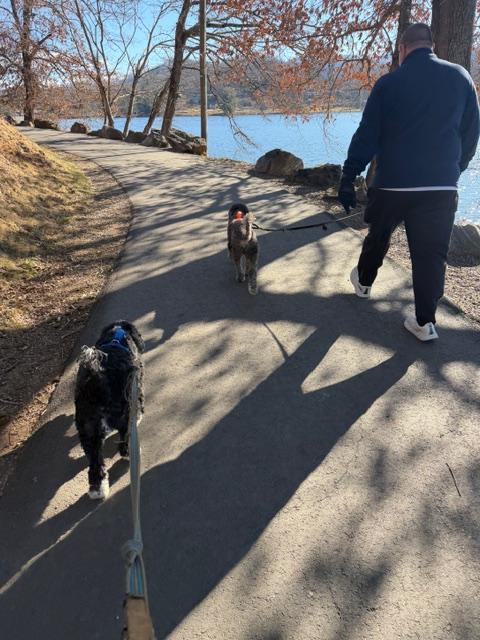
It sits near the geographic center of the county, quietly connecting Waynesville, Maggie Valley, Clyde, and Canton. For many of us, it becomes part of our weekly rhythm. We walk our dogs there. We launch kayaks there. We meet friends there. Even if you never live on the lake itself, it has a way of becoming part of your life here.
Lake Junaluska is not just scenery. It is shared ground — and for many people researching Haywood County real estate, it becomes one of the first places that shapes their perception of life in Western North Carolina.
Where Is Lake Junaluska and Why Does It Matter?
Lake Junaluska sits just off Highway 23/74, minutes from downtown Waynesville and a short drive from Maggie Valley and Clyde. The lake itself covers approximately 200 acres and was created in 1913 when a dam was constructed along Richland Creek. Over the past century, it has evolved from a seasonal assembly gathering place into one of the most recognizable landmarks in Haywood County.
At an elevation of roughly 2,600 feet, the lake rests in a wide valley basin surrounded by layered mountain ridges. The full walking loop around the shoreline spans about 2.3 to 3 miles depending on the route taken, making it one of the most accessible flat walking circuits in the county. Its central location makes it one of the most accessible gathering places in Haywood County.
Unlike remote mountain overlooks or tucked-away trailheads, the lake is woven directly into daily life. You can circle it before work, after dinner, or on a Sunday afternoon without planning a full outing.
That accessibility is part of its significance.
Morning Walks Around the Lake
One of the simplest and most consistent rituals at Lake Junaluska is the walk.
The paved loop around the lake stretches approximately three miles, offering relatively flat terrain with wide views of the surrounding mountains. It is common to see neighbors greeting each other, families pushing strollers, and retirees logging steady miles.
We are there every day walking our dogs.
Kayaking, Paddleboarding, and Quiet Water
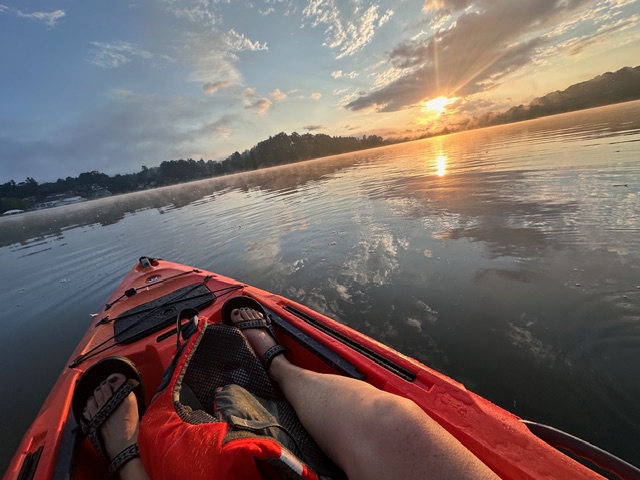
The lake also offers calm water that makes kayaking and paddleboarding approachable for a wide range of ages and experience levels. One of the defining characteristics of Lake Junaluska is that gasoline-powered outboard motors are not permitted. The absence of high-speed boat traffic keeps the water quieter and safer for paddlers, swimmers, and anglers.
Fishing is another steady presence around the shoreline. The lake is typically stocked and supports species such as bass, bream, and catfish. Early mornings often bring anglers to the banks or small watercraft positioned quietly near coves.
During the summer months, the lake becomes especially active with youth programs and day camps. The “Outfitters” area serves as a hub for seasonal activities, offering kayak and paddleboard rentals along with organized programming for campers and visitors. It adds energy to the shoreline without overwhelming the calm atmosphere.
The Lake Junaluska pool complex provides another gathering point during warmer months, giving residents and guests a place to cool off beyond the open water. It complements the recreational side of the lake without turning it into a high-intensity resort setting.
For those who prefer a slower pace, the Cherokee IV tour boat offers narrated cruises across the lake, sharing historical insights and giving passengers a different vantage point of the surrounding mountains. It is a reminder that Lake Junaluska is not just for exercise or events; it is also a place to pause and observe.
Early mornings are particularly peaceful. The water often sits glass-like, reflecting the ridgelines that frame the valley. It is not a high-speed recreation lake. There are no powerboats cutting wakes. The atmosphere leans toward quiet movement rather than noise.
For many residents, it becomes a reset button.
The History Behind Lake Junaluska
Lake Junaluska was established in 1913 as a retreat and conference center for the Methodist Episcopal Church, South, which later became part of The United Methodist Church. The lake was intentionally developed as a gathering place for conferences, leadership events, and spiritual retreats in the Southeast.
Throughout the 20th century, the site hosted major regional and national gatherings, including World Methodist Conferences and youth assemblies that brought thousands of visitors to Haywood County. That institutional history shaped much of the lake’s early architecture and layout, from the historic auditorium to the open lakeside green spaces. Over the past century, it has hosted conferences, educational programs, and faith-based gatherings that have drawn visitors from across the country.
The lake is named after Chief Junaluska, a Cherokee leader who played a role in early 19th-century regional history. The name itself ties the area to the deeper story of Western North Carolina.
Today, the Lake Junaluska Assembly continues to operate as a conference and retreat center while also serving as a residential community. Its history is visible in the architecture, the open green spaces, and the rhythm of seasonal events.
It is part institutional legacy, part local neighborhood.
The Resident Eagles
One of the quieter but powerful features of Lake Junaluska is its bald eagle population.
In recent years, nesting eagles have become a regular presence around the lake. It is not unusual to see photographers paused along the walking path or residents pointing toward a tree line.
The eagles are not staged attractions. They are simply part of the ecosystem here, a reminder that even in a well-loved public space, nature remains active.
Is Lake Junaluska Only for Residents?
No.
While there are residential neighborhoods surrounding the lake, the walking path and much of the public space are accessible. Community events, seasonal celebrations, and conferences bring in both locals and visitors. Throughout the year, Lake Junaluska hosts a mix of faith-based conferences, leadership retreats, music performances, youth gatherings, and educational seminars. Seasonal events such as Independence Day celebrations, lakeside concerts, holiday light displays, and charity walks draw residents from across Haywood County.
The Stuart Auditorium has welcomed nationally known speakers, musicians, and worship leaders over the decades, while smaller meeting spaces accommodate workshops and regional gatherings. At the same time, the lake remains a venue for 5Ks, paddle events, and informal community meetups. The blend of structured conferences and casual public events gives Lake Junaluska a layered identity, part retreat center, part neighborhood, part county gathering place.
One of the quieter highlights of the property is the Rose Walk, a landscaped garden path that runs alongside part of the lake. In bloom season, it adds a softer, more intentional layer to the shoreline experience. Benches along the walk provide places to pause, read, or simply look out over the water.
Overlooking the lake stands the historic Lambuth Inn, originally opened in 1921. The inn has long served as a central lodging and gathering space for conference attendees and visitors. Its presence reinforces the lake’s legacy as both a retreat destination and a working community hub. Even for those who do not stay there, the building remains one of the most recognizable landmarks on the property.
Lake Junaluska does not feel gated off from the rest of the county. It feels shared.
That shared access is part of why so many people, regardless of where they live in Haywood County, consider it “their” lake.
What Is It Like to Live at Lake Junaluska?
Living at Lake Junaluska comes with a unique structure.
The residential areas operate under the governance of the Lake Junaluska Assembly. Homes are typically subject to recorded covenants and design guidelines, and the community maintains its own utility systems, including water and sewer services. Unlike many neighborhoods that rely entirely on municipal utilities, Lake Junaluska functions more like a self-contained community.
Property owners pay an annual Assembly fee in addition to standard property taxes. This fee is a key part of how the community operates and is one of the main distinctions buyers should understand early in the process.
The fee is generally calculated based on the assessed value of the property, using a set rate per $100 of value that is established by the Assembly each year. In simple terms, higher-value homes will typically have a higher Assembly fee, while smaller or lower-value properties will pay less. Because the rate can change periodically, buyers should always confirm the current fee during due diligence and understand how it applies to the specific property they are considering.
Rather than functioning like a traditional HOA with a flat or tiered structure, this approach ties the fee more directly to the property itself and helps support the broader infrastructure and experience of the community.
Services supported by Assembly fees commonly include:
• Maintenance of roads and common areas
• Water and sewer system infrastructure
• Lake and dam upkeep
• Security and community oversight
• Landscaping and public space maintenance
Short-term rental policies may differ from other parts of Haywood County, and ownership structures are not identical to a typical subdivision. Understanding these distinctions is essential before purchasing.
Homes at Lake Junaluska range from historic cottages to newer construction, and they attract a mix of full-time residents and second-home owners.
It is not simply a neighborhood. It is a defined community with its own operating framework.
Living Nearby vs Living Elsewhere in Haywood County
One of the strengths of Lake Junaluska is that you do not have to live directly on the lake to enjoy it.
Residents in Waynesville, Maggie Valley, Canton, and Clyde often incorporate the lake into their routines. Its central location makes it accessible without requiring lakeside ownership.
That flexibility is part of its appeal.
Whether you prefer mountain ridges, rural acreage, gated communities, or in-town neighborhoods, Lake Junaluska often becomes part of the broader lifestyle.
Why It Becomes Part of Your Routine
Some places feel exclusive. Others feel communal.
Lake Junaluska leans toward the latter. It is a place where history, recreation, and daily life intersect without much friction.
For us, it is where we walk the dogs. It is where we launch kayaks. It is where we cross paths with clients and friends without planning to.
And regardless of where you ultimately choose to live in Haywood County, there is a strong chance Lake Junaluska will become part of your story here as well.
Considering Buying Near Lake Junaluska?
If you are exploring homes at or near Lake Junaluska, we are happy to walk you through the community structure, utility systems, covenants, ownership nuances, and current market dynamics so you understand exactly what to expect before making an offer.
Clarity matters just as much as location.
Whether you choose to live on the lake or simply enjoy it as part of your weekly routine, it remains one of Haywood County’s most enduring and accessible landmarks.

Ready to Make Your Move in Western North Carolina?
We help buyers and sellers across Western North Carolina, including Haywood, Jackson, and Buncombe counties, move forward with clarity and confidence.
Jason Revelia
Call 828-342-1334 |
Email Jason
Shannon Revelia
Call 828-226-6767 |
Email Shannon


