
 Facebook
 X
X
 Pinterest
 Copy Link
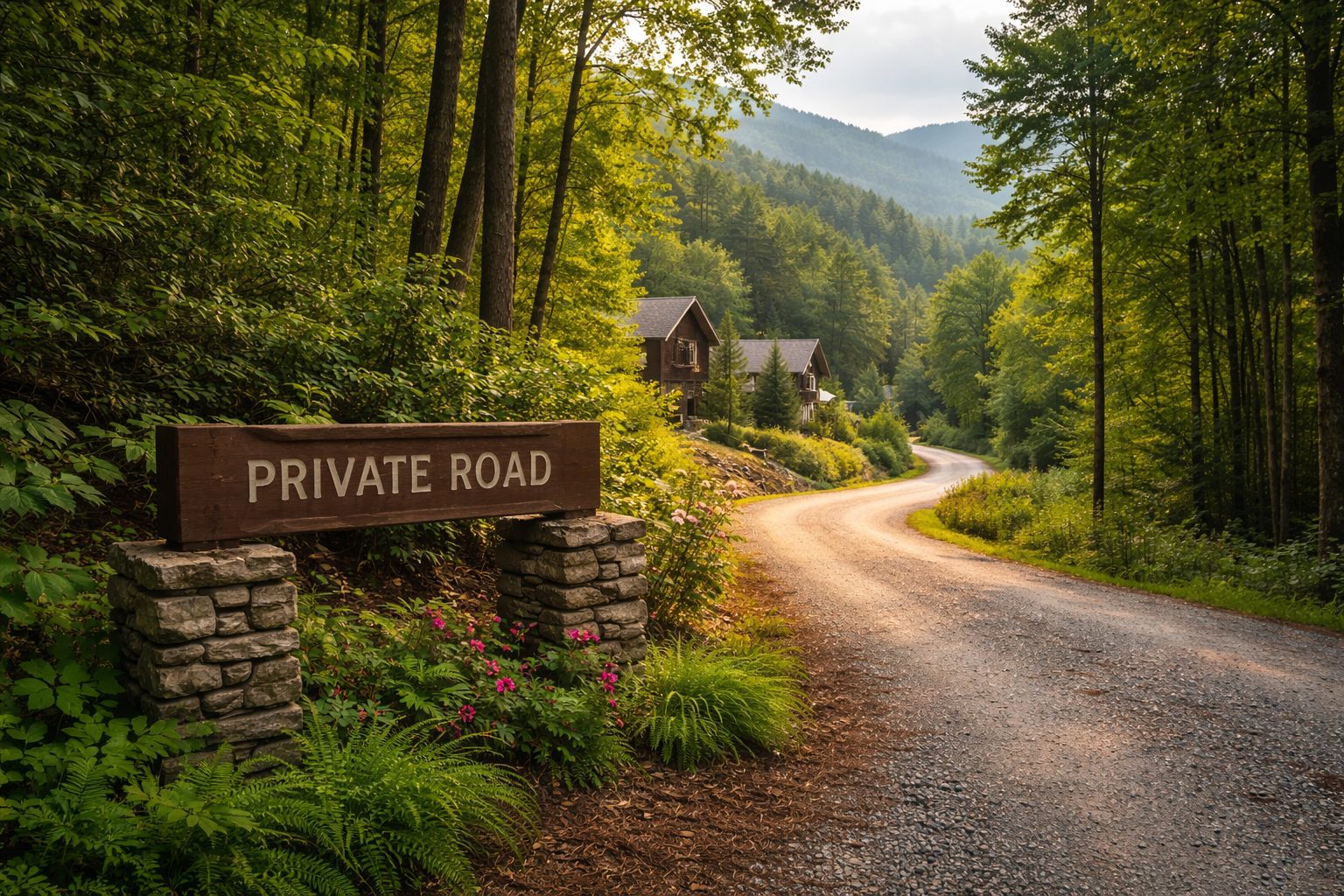
Private Roads in Western North Carolina: What Buyers Should Know
When buying a home, most people assume the road leading to the property is maintained by the city, county, or state.
In Western North Carolina, that isn’t always the case.
Because many homes are located in rural areas, mountain communities, or private subdivisions, it’s very common for properties to be accessed by private roads. For buyers relocating to the mountains, this can be one of the biggest surprises during the home search process.
Understanding how private roads work—and what to look for—can help ensure there are no unexpected issues after closing.
What Is a Private Road?
A private road is exactly what the name suggests: a road that is not maintained by the government.
Instead of the county or state being responsible, maintenance is typically handled by:
• Property owners who use the road
• A homeowners association (HOA)
• A shared agreement between neighbors
Private roads are common throughout Haywood County and surrounding mountain areas, especially in neighborhoods with larger parcels, cabins, or homes tucked into the mountains.
Why Private Roads Are So Common in the Mountains
Mountain terrain plays a major role in why private roads are so common in Western North Carolina.
Building public roads in steep terrain is expensive and requires meeting strict engineering standards. Because of this, many communities develop private access roads instead of going through the process of having roads built to state specifications.
Private roads are especially common in:
• Small mountain neighborhoods
• Rural acreage properties
• Cabin communities
• Scenic ridge-top developments
In many cases, these roads lead to some of the most desirable properties in the region.
What Determines if a Road Is Public or Private?
In North Carolina, a road becomes public only when it is accepted into the state-maintained system by the North Carolina Department of Transportation (NCDOT).
For that to happen, the road must be:
• Built to specific construction standards
• Inspected and approved by NCDOT
• Formally added to the state system
These standards include requirements for:
-
road width
-
grading and slope
-
drainage systems
-
culverts
-
emergency access
If a road does not meet these requirements, it remains private.
Does the Number of Homes Make a Road Public?
A common misconception is that once enough homes are built along a road, the state will eventually take it over.
In reality, the number of homes does not determine whether a road becomes public.
Even roads serving dozens of homes can remain private if they were never built to NCDOT standards or formally accepted into the state system.
In Western North Carolina, it’s very common to see long private roads serving entire neighborhoods.
Can a Private Road Become Public Later?
In some cases, yes—but it is not automatic and is relatively uncommon.
For a private road to become public:
-
The road typically must be upgraded to meet NCDOT standards
-
Property owners or a developer usually fund the improvements
-
A formal request for acceptance must be submitted
-
NCDOT must inspect and approve the road
Because of the cost involved, many private roads in the mountains remain private indefinitely.
Road Maintenance Agreements
One of the most important things to understand when buying a home on a private road is how maintenance is handled.
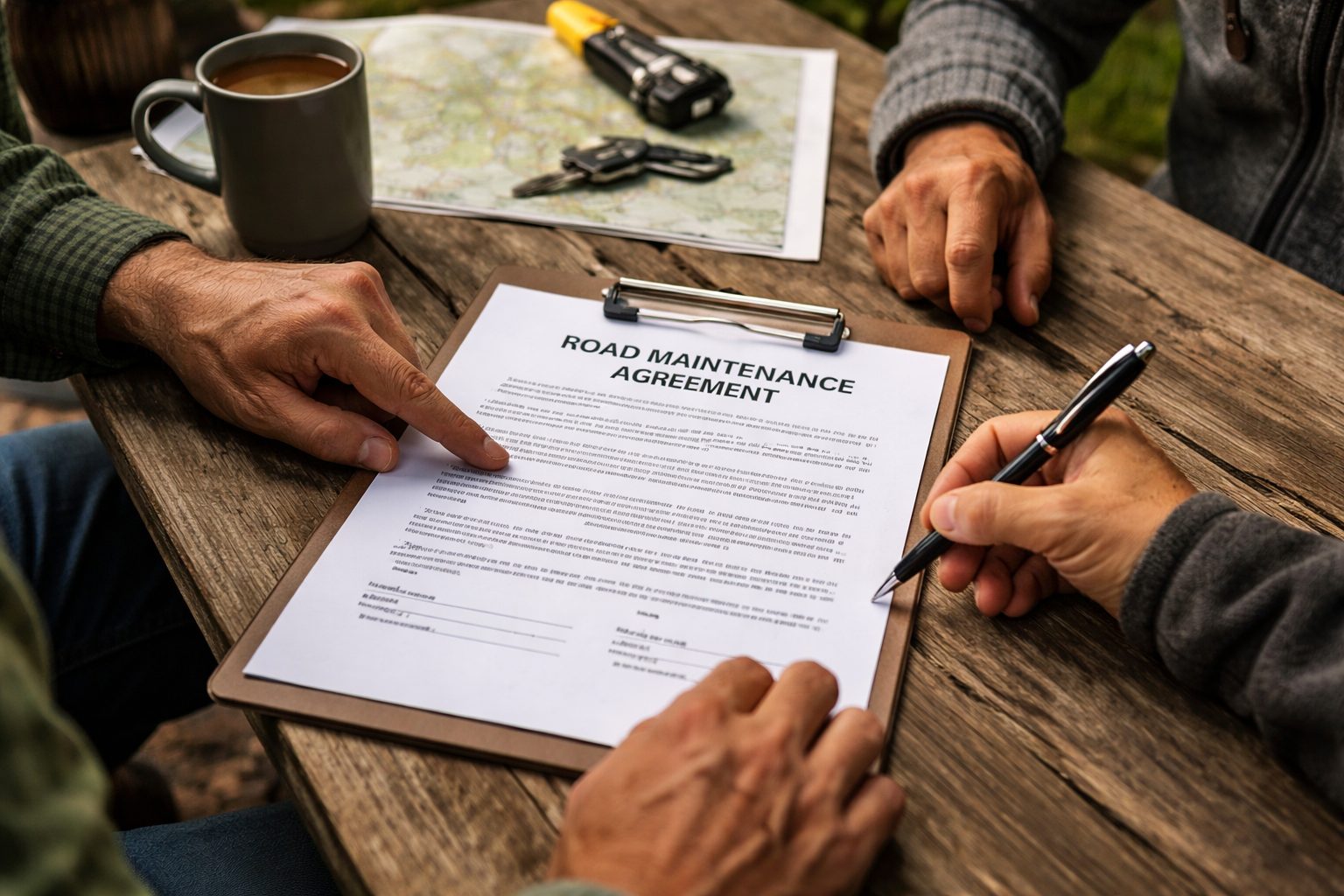
Some roads have formal road maintenance agreements, which outline how property owners share responsibility for upkeep.
These agreements may cover:
• Gravel replacement and grading
• Drainage and culvert maintenance
• Tree removal after storms
• Snow removal
• Cost-sharing among neighbors
Other roads operate more informally, with neighbors coordinating maintenance as needed.
Gravel Roads vs. Paved Roads
Many private roads in Western North Carolina are gravel rather than paved.
Gravel roads are often more practical in mountain terrain because they:
• Are less expensive to maintain
• Allow for easier drainage
• Can be repaired more easily after storms
Paved private roads do exist, especially in larger subdivisions, but even paved roads may still be privately maintained.
Winter Weather and Snow Removal
Winter weather is another factor buyers often ask about.
Public roads are maintained by the state, but private roads are typically maintained by the people who use them.
In many communities:
• Neighbors coordinate snow removal
• A local contractor may be hired
• Access depends on elevation and weather conditions
While heavy snow is not constant in Haywood County, it can occur—especially at higher elevations.
Lender Considerations
Private roads can also play a role in financing.
Most lenders want to ensure:
• The property has legal access via recorded easements
• There is a reasonable expectation the road will remain usable
In some cases, lenders may prefer to see a road maintenance agreement in place.
Your real estate agent and closing attorney will typically review these details during the transaction.
What Buyers Should Check During Due Diligence
During the due diligence period, buyers should take time to understand how the road functions.
Key items to review include:
• Recorded road easements
• Any maintenance agreements
• The physical condition of the road
• Driveway access to the home
• Shared maintenance expectations
This step helps ensure there are no surprises after closing.
Questions to Ask Before Buying a Home on a Private Road
If a property is accessed by a private road, a few simple questions can help provide clarity.
Is there a recorded road maintenance agreement?
Some roads have formal agreements, while others rely on informal arrangements.
Who maintains the road?
Maintenance may be handled by neighbors or an HOA.
How often is the road maintained?
Gravel roads may need periodic grading or additional material.
Is snow removal coordinated?
Some communities have established plans for winter weather.
Are there recorded easements for access?
Legal access is essential and should always be confirmed.
How steep is the road or driveway?
Driving the property in person is always recommended.
Private Roads and Mountain Living
Private roads are simply part of life in Western North Carolina.
They often lead to some of the most beautiful properties in the region—homes with mountain views, wooded privacy, and access to outdoor recreation.
While they do require a bit more understanding during the buying process, they are very common and typically function smoothly once expectations are clear.

Ready to Make Your Move in Western North Carolina?
We help buyers and sellers across Western North Carolina, including Haywood, Jackson, and Buncombe counties, move forward with clarity and confidence.
Jason Revelia
Call 828-342-1334 |
Email Jason
Shannon Revelia
Call 828-226-6767 |
Email Shannon


