
 Facebook
 X
X
 Pinterest
 Copy Link
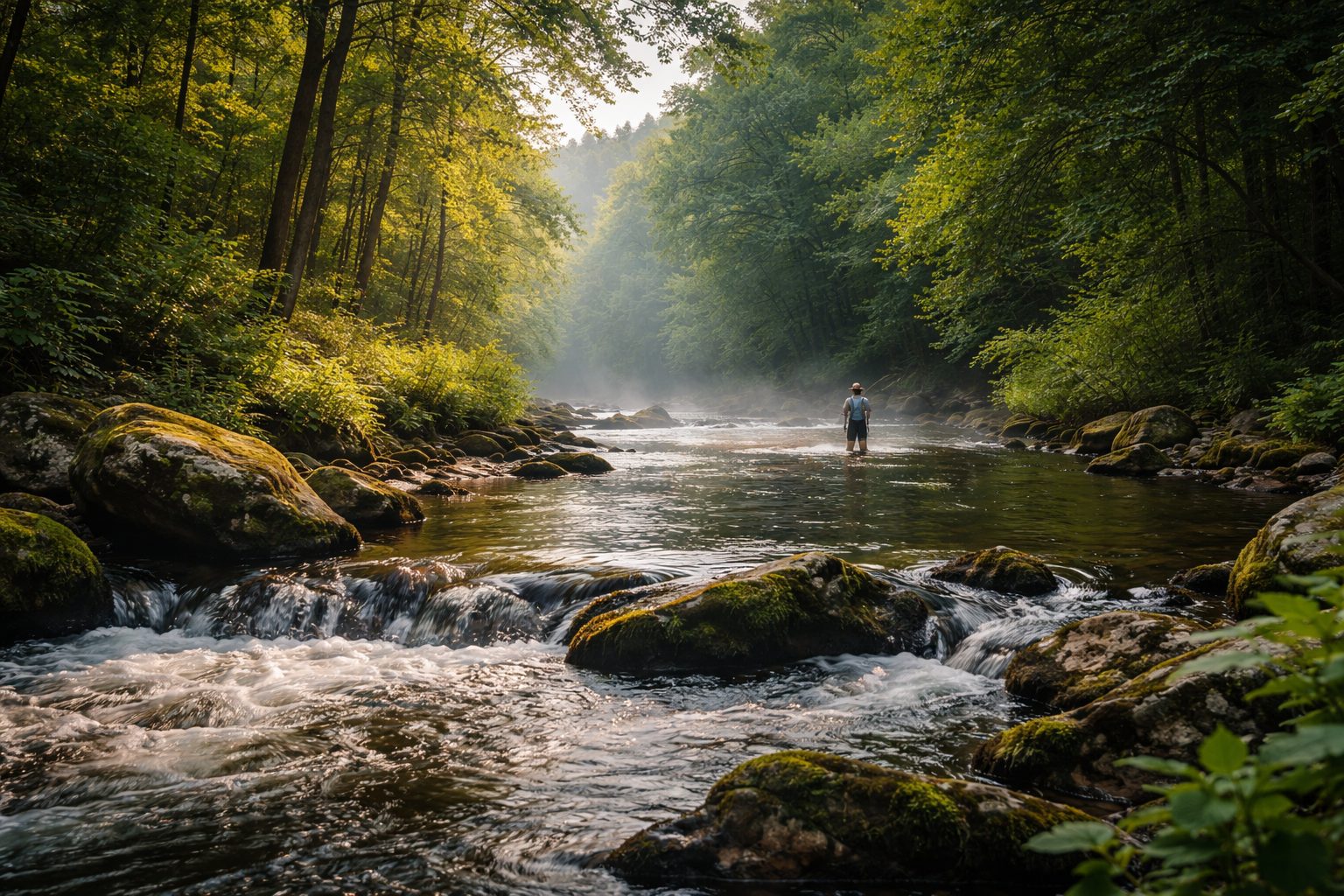
Mountain Heritage Trout Waters: Trout Fishing in Maggie Valley, Waynesville, and Western North Carolina
One of the things that makes Western North Carolina special is how deeply outdoor recreation is woven into everyday life. Hiking, biking, paddling, and fishing aren’t just weekend activities here—they’re part of the culture of many mountain towns.
One example of this connection between community and the outdoors is the Mountain Heritage Trout Waters Program, created by the North Carolina Wildlife Resources Commission.
The program highlights select trout streams that flow directly through mountain towns across Western North Carolina. These streams provide easily accessible fishing opportunities and celebrate the role trout fishing has played in mountain communities for generations.
For anglers—and for people considering living in the mountains—it means something unique: great trout fishing right in the middle of town.
What Is the Mountain Heritage Trout Waters Program?
The Mountain Heritage Trout Waters Program was developed by the North Carolina Wildlife Resources Commission to recognize communities where trout streams flow directly through town and provide accessible fishing opportunities.
Rather than focusing only on remote backcountry waters, the program highlights streams that are part of everyday life in mountain communities.
Designated Mountain Heritage Trout Waters typically feature:
• Public fishing access
• Hatchery-supported trout stocking
• Easy access from roads, parks, or greenways
• Community events centered around fishing
The program celebrates the connection between mountain towns and trout fishing while encouraging outdoor recreation for both residents and visitors.
Several communities across Western North Carolina participate in the program. Each town has a designated trout stream flowing directly through it.
These include:
• North Toe River — Newland
• North Toe River — Spruce Pine
• Cane Creek — Bakersville
• Richland Creek — Waynesville
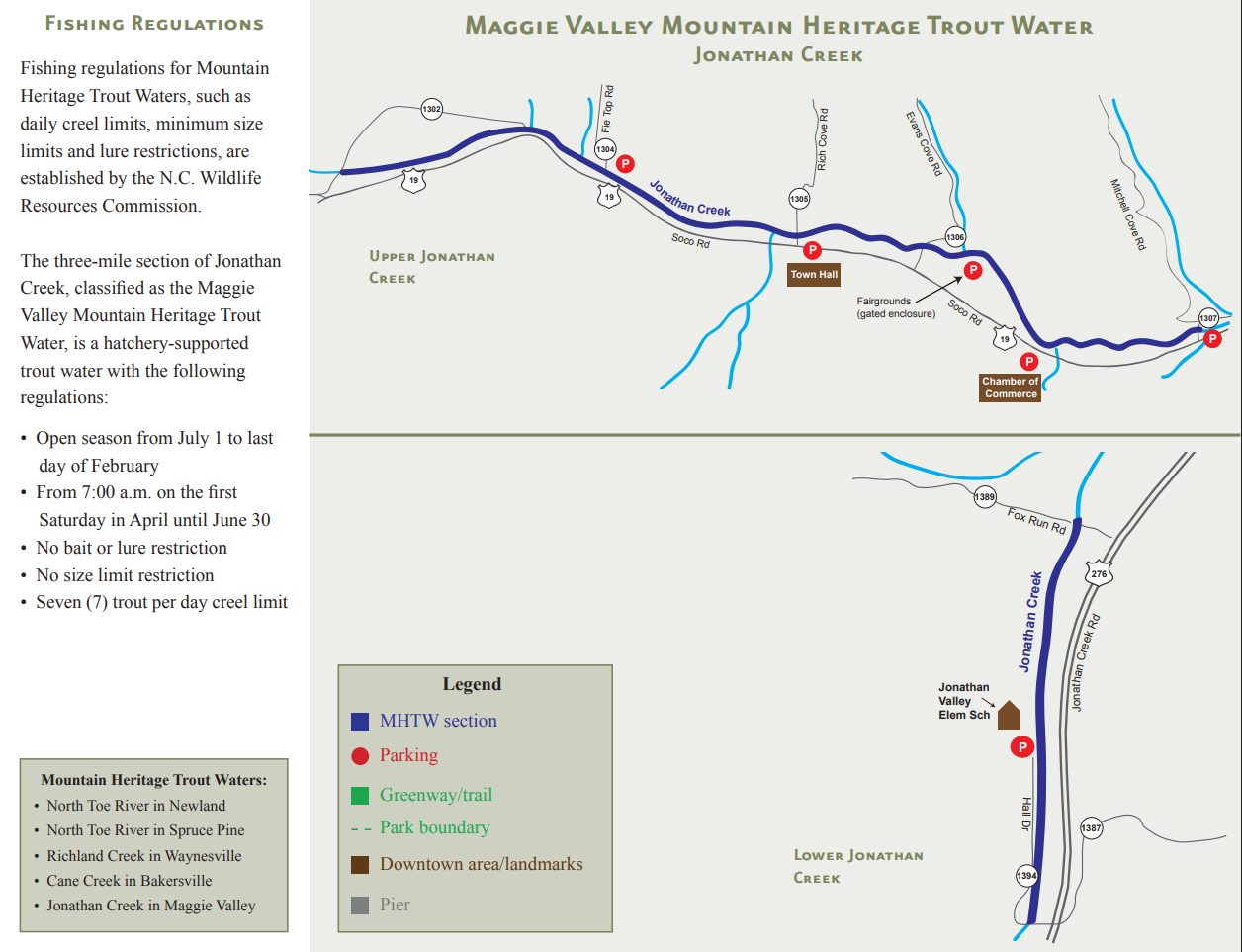
• Jonathan Creek — Maggie Valley
These streams offer something fairly rare in the fishing world: the ability to fish within walking distance of downtown areas, parks, and restaurants. https://www.ncwildlife.gov/fishing/fishing-programs/mountain-heritage-trout-waters-program
Understanding the Difference: Mountain Heritage Trout Waters vs. Heritage Waters
One detail that sometimes causes confusion is that North Carolina actually has two trout programs with similar names.
The Mountain Heritage Trout Waters Program focuses on streams that run through mountain towns and provide accessible fishing opportunities close to communities. These waters are typically hatchery-supported trout fisheries designed to encourage local recreation and tourism.
Streams like Jonathan Creek in Maggie Valley and Richland Creek in Waynesville are examples of Mountain Heritage Trout Waters.
By contrast, the Heritage Waters designation—also managed by the North Carolina Wildlife Resources Commission—focuses on rivers capable of producing larger trout and high-quality fishing experiences.
Examples of Heritage Waters in Western North Carolina include:
• The Tuckasegee River
• The Oconaluftee River
• Snowbird Creek
• Wilson Creek
While both programs celebrate trout fishing, they serve slightly different purposes. Mountain Heritage Trout Waters emphasize community access and local fishing traditions, while Heritage Waters focus more on protecting and enhancing exceptional trout fisheries.
Together, they help preserve the long-standing fishing culture of the mountains.
Jonathan Creek in Maggie Valley
Jonathan Creek flows through the heart of Maggie Valley, running alongside Soco Road and through the valley floor before continuing toward Waynesville.
A three-mile section of Jonathan Creek is designated as a Mountain Heritage Trout Water and is managed as a hatchery-supported trout fishery.
Because the creek runs directly through town, anglers can easily pull off the road and access productive stretches of water. The creek is stocked regularly and provides fishing opportunities throughout much of the year.
Jonathan Creek is particularly appealing because it combines:
• Beautiful mountain scenery
• Convenient roadside access
• Reliable trout stocking
• Close proximity to lodging, restaurants, and shops
It’s not unusual to see anglers casting in the creek early in the morning or in the evening while the surrounding mountains begin to cool.
Richland Creek in Waynesville
Just a few minutes away, Richland Creek flows through the town of Waynesville and is also part of the Mountain Heritage Trout Waters program.
Richland Creek winds through several scenic areas of town, including parks and neighborhoods near downtown Waynesville.
The creek provides multiple public access points and offers anglers the opportunity to fish while still being close to restaurants, coffee shops, and local businesses.
For many residents, Richland Creek represents the type of fishing experience that makes Western North Carolina unique—a quiet trout stream flowing right through town.
Other Great Trout Streams Near Waynesville and Maggie Valley
While the Mountain Heritage Trout Waters program highlights streams located within towns, anglers living in Haywood County also have access to many outstanding trout fisheries within a short drive.
One of the most popular is the Tuckasegee River, often called “The Tuck.” Flowing through Sylva and Dillsboro, the river supports both stocked and wild trout populations and is part of North Carolina’s Heritage Waters program. Because it is a larger river, the Tuckasegee allows for both wading and float fishing and is a favorite among guides and experienced anglers.
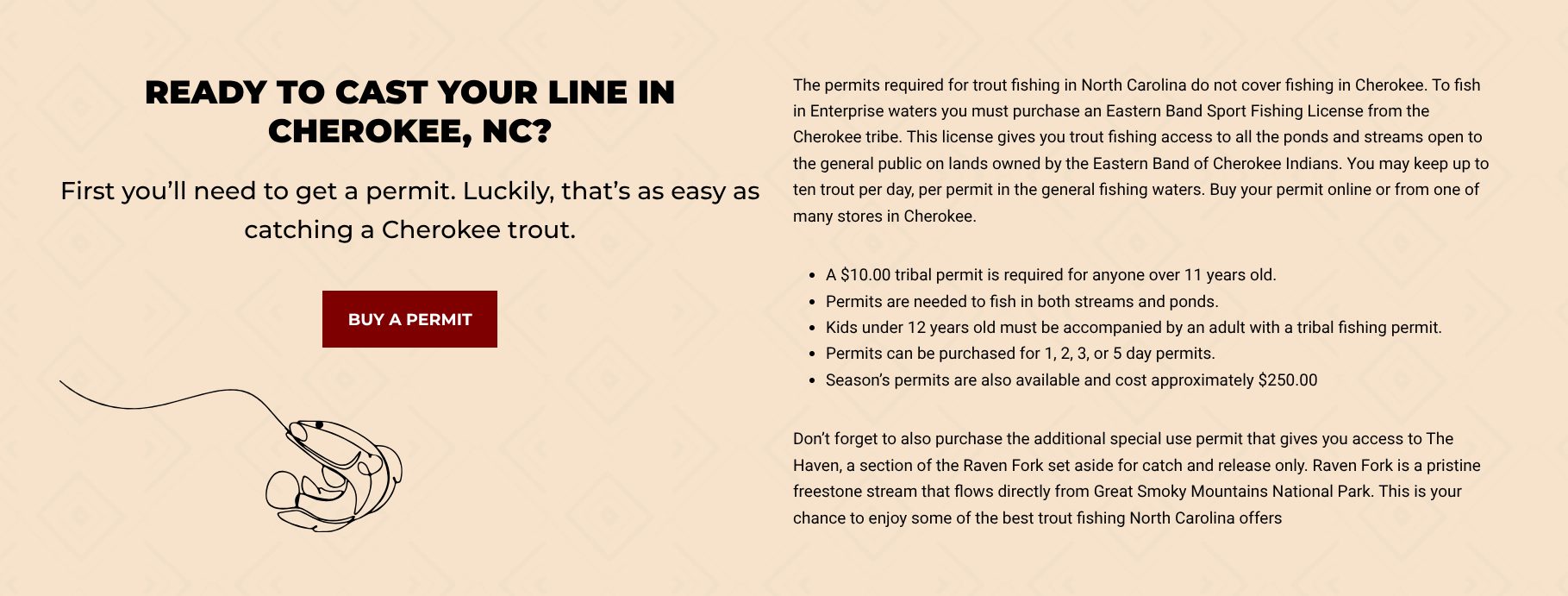
The Oconaluftee River flows through Cherokee and into the Great Smoky Mountains National Park. Portions of the river are designated Heritage Waters, while sections flowing through Cherokee are managed as part of the Cherokee Tribal Waters fishery operated by the Eastern Band of Cherokee Indians. The tribal program includes more than 30 miles of stocked trout water and is one of the most popular fishing destinations in the region.
Another scenic option is Cataloochee Creek, located within the Cataloochee Valley section of the Great Smoky Mountains National Park. The creek is known for its peaceful mountain setting and wild trout populations.
Closer to Canton, the Pigeon River has seen significant restoration over the past several decades and now supports improving trout populations while offering easy roadside access and beautiful mountain scenery.
When Trout Are Stocked in Haywood County
Trout fishing in Western North Carolina is supported by regular stocking from the North Carolina Wildlife Resources Commission.
Hatchery-supported streams are typically stocked multiple times throughout the year, particularly during the spring and early summer.
Typical stocking seasons include:
Spring – March through June is one of the most active stocking periods and a very popular time for anglers.
Summer – Some waters continue to receive stockings into early summer, although warmer temperatures often push anglers toward higher elevation streams.
Fall – Some streams receive fall stockings, which can create excellent fishing as water temperatures cool.
The Wildlife Resources Commission publishes updated stocking schedules each year so anglers can track when trout are being stocked in specific streams.
Opening Day of Trout Season in Cherokee
One of the biggest fishing traditions in the region takes place each spring in the town of Cherokee, just a short drive from Maggie Valley and Waynesville.
The opening day of trout fishing in Cherokee takes place on the last Saturday in March, when the Cherokee Tribal Waters officially reopen after a short closure period that allows for heavy stocking of trout.
When the season opens, thousands of anglers travel to Cherokee to fish along the Oconaluftee River and surrounding streams on the Qualla Boundary.
Opening weekend also includes the Cherokee Opening Day Trout Tournament, where specially tagged trout are stocked and anglers have the opportunity to win cash prizes for catching them.
Campgrounds throughout the area fill up with fishermen preparing for the early morning start. One of the most popular places to stay is the Cherokee / Great Smokies KOA, where many anglers gather for the weekend and head out to the river before sunrise.
For many fishermen across the Southeast, opening day in Cherokee has become an annual tradition that marks the unofficial start of spring fishing in the Smoky Mountains.
Local Fly Shops and Guided Trips
Western North Carolina has a strong fly fishing culture supported by knowledgeable guides and local fly shops.
Several respected shops near Haywood County include:
• Maggie Valley Fly Shop
• Bears Den Fly Fishing Company
• Hunter Banks Fly Fishing
• Tuckaseegee Fly Shop
• Davidson River Outfitters
These shops provide gear, fly-tying supplies, fishing reports, and guided fly fishing trips on rivers throughout Western North Carolina.
Guided trips can be especially helpful for visitors or newcomers because guides provide equipment, instruction, and local knowledge about productive fishing locations.
Why Western North Carolina Is One of the Best Trout Regions in the Southeast
Western North Carolina is widely considered one of the best trout fishing regions in the southeastern United States.
Several natural factors contribute to this reputation.
First, the elevation of the southern Appalachian Mountains creates the cold, oxygen-rich water trout need to survive. Many streams originate high in the mountains and remain cool even during the warmer months.
Second, the region contains an enormous amount of protected land. The Great Smoky Mountains National Park, Pisgah National Forest, and Nantahala National Forest together provide thousands of miles of trout streams.
Finally, decades of conservation work and fish management by the North Carolina Wildlife Resources Commission have helped maintain healthy trout populations across the region.
The result is a landscape where anglers can find everything from small, secluded mountain creeks holding wild brook trout to larger rivers capable of producing impressive brown and rainbow trout.
Why Trout Fishing Is Part of Life in Western North Carolina
In many parts of the country, fishing requires planning a special trip. In Western North Carolina, it’s simply part of everyday life.
Streams run through town parks, along walking trails, and beside quiet mountain roads. It’s common to see anglers stopping along a creek for an hour of fishing before heading home for the evening.
For people who enjoy the outdoors, that kind of access is one of the reasons so many anglers are drawn to the mountains of Western North Carolina.
Learn More
You can learn more about the Mountain Heritage Trout Waters program through the
North Carolina Wildlife Resources Commission website. https://www.ncwildlife.gov/fishing/fishing-programs/mountain-heritage-trout-waters-program

Ready to Make Your Move in Western North Carolina?
We help buyers and sellers across Western North Carolina, including Haywood, Jackson, and Buncombe counties, move forward with clarity and confidence.
Jason Revelia
Call 828-342-1334 |
Email Jason
Shannon Revelia
Call 828-226-6767 |
Email Shannon


