
 Facebook
 X
X
 Pinterest
 Copy Link

Where First-Time Home Buyers Should Start
Understanding Lenders, Pre-Approval, and the First Steps to Buying a Home
For many first-time buyers, the biggest challenge isn’t choosing a home.
It’s understanding where to begin.
Questions often start with things like:
-
Where do I even start?
-
Do I talk to a lender first?
-
What is pre-qualification versus pre-approval?
-
What type of loan should I be considering?
-
How much money do I actually need?
The home buying process can feel overwhelming at first. But when broken down into a few clear steps, it becomes much easier to understand.
If you’re considering buying your first home in Western North Carolina — or anywhere in the state — here’s where most buyers begin.
Step 1: Get Pre-Qualified to Understand Your Buying Power
Before touring homes, the first step most buyers take is speaking with a lender to understand their financing options.
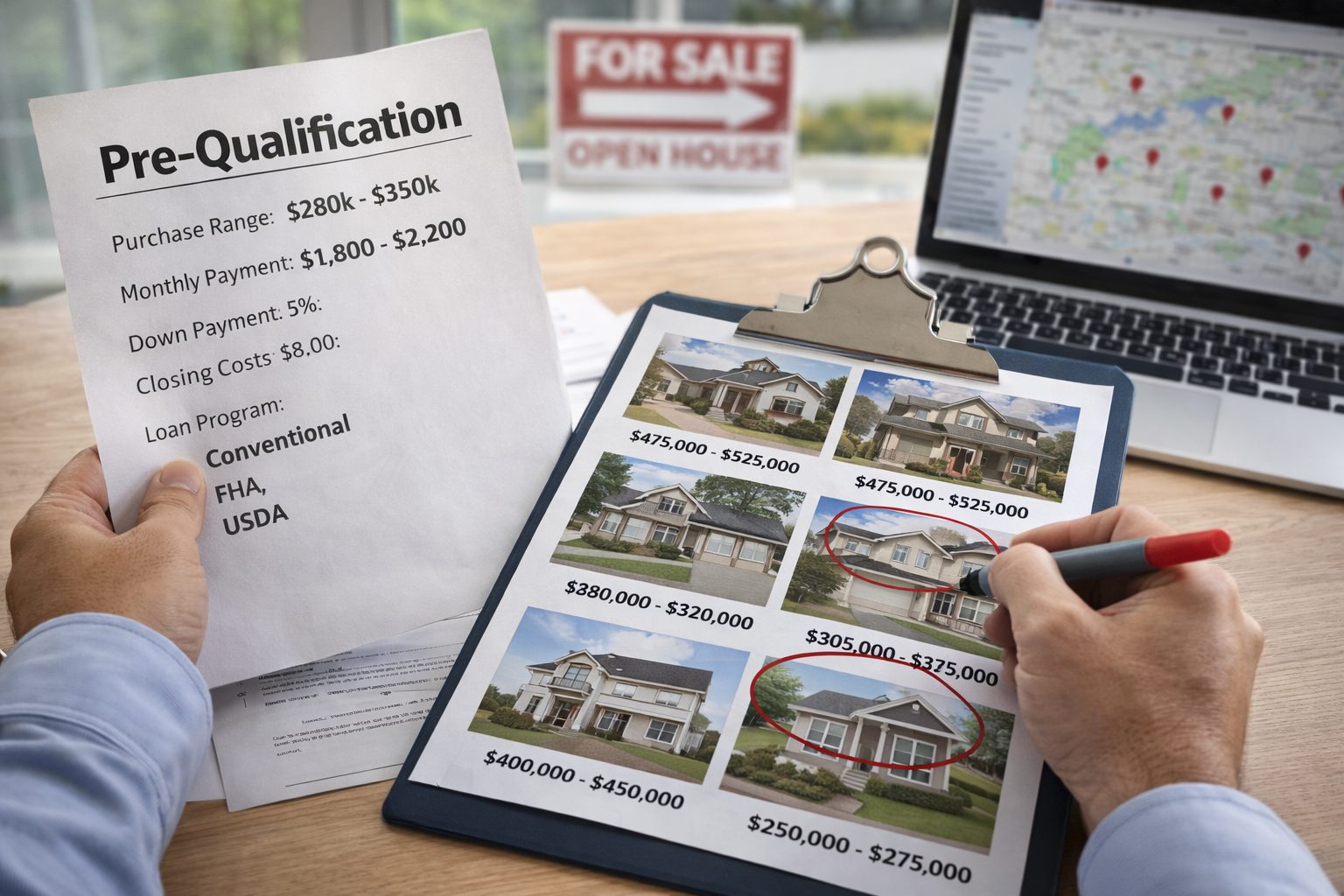
This process is commonly called getting pre-qualified or pre-approved, and it helps determine your buying power — the price range you may realistically qualify for based on your financial situation.
A lender will review information such as:
-
Income
-
Credit score
-
Existing debt
-
Savings and down payment funds
-
Employment history
From there, they can help estimate:
-
Your potential purchase price range
-
Estimated monthly payment
-
Down payment options
-
Loan programs you may qualify for
-
Approximate closing costs
Knowing this information early allows you to focus your home search much more effectively.
Instead of browsing every listing that catches your eye online, you can concentrate on homes that fit comfortably within your financial range.
It also helps your real estate agent guide you toward properties that align with both your goals and your budget.
For many buyers, this initial conversation with a lender removes a lot of uncertainty and provides clarity before they begin touring homes.
What Do We Mean by “Lender”?
When people say “talk to a lender,” they are referring to the company that provides the financing for your home purchase.
But lenders can come in several different forms, and first-time buyers are often surprised by how many options exist.
Banks
Traditional banks offer mortgage lending alongside their other financial services.
If you already have accounts with a bank, it can sometimes be convenient to start the conversation there. However, banks typically offer only the loan programs available within their institution.
Credit Unions
Credit unions often provide competitive rates and lower fees because they operate as member-owned institutions.
Many buyers explore credit union options, especially if they already have accounts there.
Mortgage Lenders or Mortgage Companies
These companies specialize specifically in home loans.
Because mortgages are their primary focus, they often have access to a wider range of loan programs and may process loans more quickly than some traditional banks.
Mortgage Brokers
Mortgage brokers work with multiple lending institutions and help match borrowers with loan programs that fit their financial situation.
Instead of lending the money directly, they help buyers compare options across several lenders.
Online or Technology-Based Lenders
Companies such as Rocket Mortgage, Better, and even platforms like Zillow now offer mortgage lending.
These lenders often focus on digital applications and streamlined approval processes.
Convenience can be appealing, but buyers should still review loan terms and costs carefully.
Builder or Developer Lending Programs
In some new construction communities, builders may have a preferred lender or their own lending division.
These lenders sometimes offer incentives such as closing cost credits or interest rate discounts if buyers choose to use their financing.
Buyers are not required to use these lenders, but they are often presented as an option.
Why It’s Smart to Compare Lenders
Not all loan offers are the same.
Interest rates, closing costs, fees, and loan structures can vary between lenders.
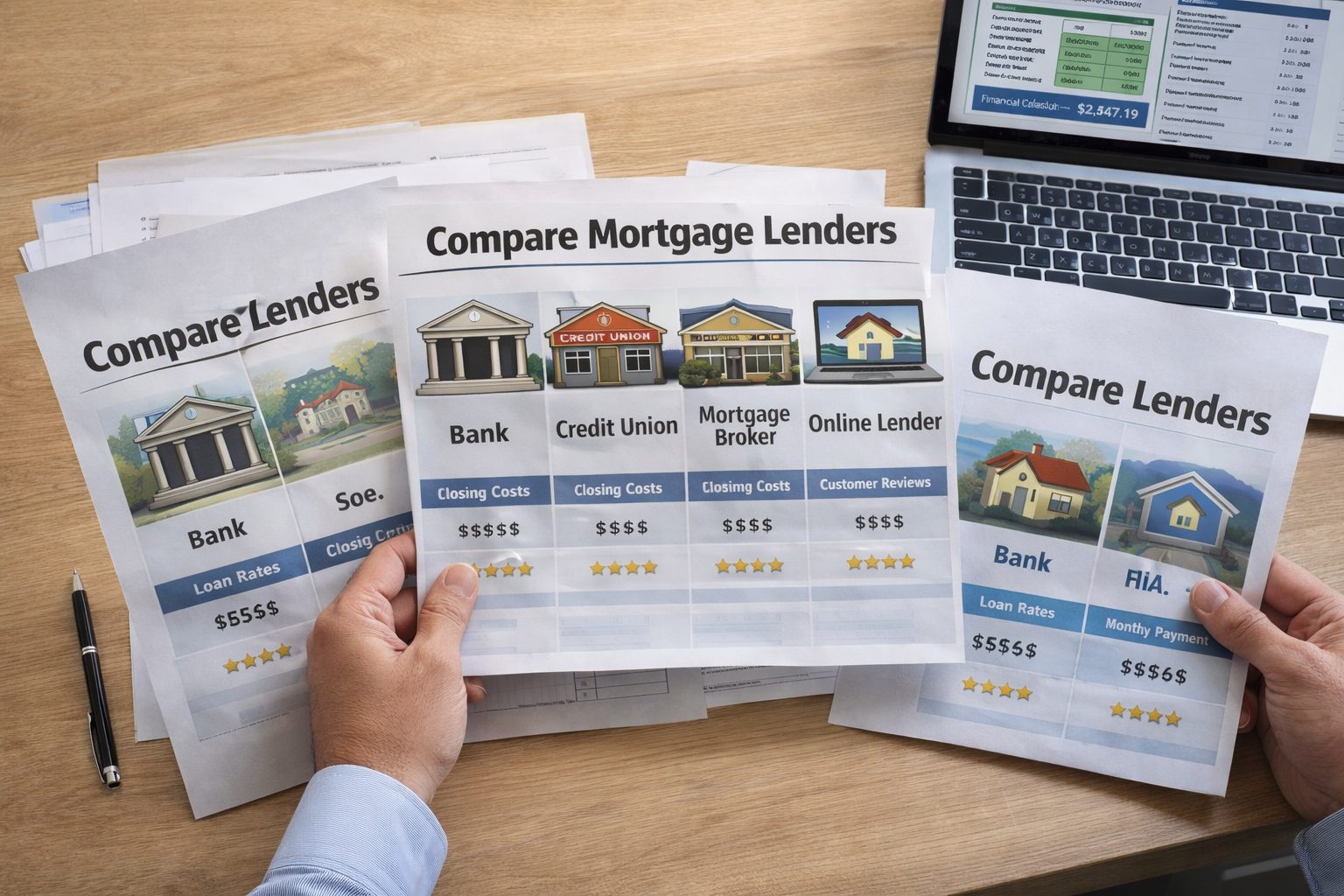
For that reason, many buyers choose to speak with two or three lenders before deciding which financing package works best for them.
When comparing lenders, buyers often look at:
-
Interest rates
-
Estimated monthly payments
-
Closing costs
-
Loan program options
-
Communication and responsiveness
The goal isn’t just finding the lowest rate — it’s finding a lender who provides clear guidance and a loan structure that fits your financial goals.
Pre-Qualification vs Pre-Approval
These terms are often used interchangeably, but they are slightly different.
Pre-Qualification
A pre-qualification is an early estimate based on information you provide to a lender.
It usually involves:
-
Basic financial information
-
A credit check
-
A rough purchasing range
This step helps buyers understand where they may fall financially before beginning the home search.
Pre-Approval
A pre-approval is more detailed.
The lender reviews documentation such as:
-
Pay stubs
-
Tax returns
-
Bank statements
-
Credit history
-
Employment verification
The result is a stronger letter showing that your finances have been reviewed and that financing is likely to move forward if a suitable property is found.
In competitive markets, sellers often expect buyers to have a pre-approval in place before submitting an offer.
How Long Does It Take to Get Pre-Approved?
Many first-time buyers assume the pre-approval process takes weeks.
In reality, it’s often much faster.
If buyers have their financial documents ready, many lenders can provide a pre-approval within a day or two, and sometimes even the same day.
The process usually involves:
-
Completing a short loan application
-
Providing financial documentation
-
Allowing the lender to review credit history
-
Receiving a pre-approval letter showing your estimated purchasing range
Because the process is relatively quick, many buyers choose to speak with more than one lender before deciding who they want to work with.
Types of Home Loans First-Time Buyers Should Know
There are several common loan programs available to buyers in North Carolina.
A lender can help determine which one fits your situation.
Conventional Loans
Conventional loans are widely used and often work well for buyers with:
-
Solid credit
-
Stable income
-
Ability to make a down payment
These loans typically have fewer property condition requirements compared to some government-backed programs.
FHA Loans
FHA loans are designed to help make homeownership more accessible.
They often allow:
-
Lower down payments
-
More flexible credit guidelines
Because of these benefits, they are frequently used by first-time buyers.
However, FHA loans also include property condition requirements to ensure the home meets basic safety and livability standards.
USDA Loans
USDA loans are designed for rural areas — and much of Western North Carolina qualifies geographically.
These loans may allow:
-
Zero down payment
-
Competitive interest rates
However, the property must meet certain location and condition guidelines.
VA Loans
VA loans are available to eligible military members and veterans.
Benefits may include:
-
No down payment
-
Competitive interest rates
-
No private mortgage insurance
Property Requirements for FHA and USDA Loans
One thing that surprises some buyers is that FHA and USDA loans evaluate both the borrower and the property itself.
These loan programs require the home to meet certain safety and livability standards.
During the appraisal, the appraiser is also checking for issues that could affect the home’s condition.
Examples may include:
-
Peeling paint on older homes
-
Missing handrails
-
Broken windows
-
Roof concerns
-
Safety hazards
-
Non-functioning heating systems
-
Structural issues
If these issues are identified, the lender may require them to be addressed before the loan can close.
How Repairs Work With FHA and USDA Loans
If the appraisal identifies required repairs, the lender may pause the loan until those repairs are completed.
In many cases, that means the seller must complete the repairs before closing.
Even if a buyer is willing to accept the home as-is, the lender may still require those issues to be addressed before approving the loan.
This is one reason some sellers prefer conventional offers when comparing multiple buyers.
However, FHA and USDA loans remain extremely valuable programs that help many first-time buyers become homeowners.
How Much Money Do You Actually Need?
Many buyers assume they need a 20% down payment.
That’s not always the case.
Depending on the loan program, buyers may need funds for:
-
Down payment
-
Earnest money deposit
-
Due diligence fee (specific to North Carolina)
-
Inspection costs
-
Closing costs
A lender can help outline realistic numbers early in the process so there are fewer surprises later.
North Carolina Is a Little Different
North Carolina has a few unique aspects to its home buying process.
For example:
-
Buyers pay a Due Diligence Fee directly to the seller when going under contract
-
Earnest money is held in escrow
-
Closing is handled by a real estate attorney
If you’re relocating from another state, these details may feel unfamiliar at first.
But once explained, the process becomes much easier to navigate.
Final Thought
The first home purchase always feels like a big step.
But the process becomes much clearer once you start with the right foundation.
Understanding financing options, getting pre-approved, and learning how the North Carolina process works will make the rest of the journey much easier.
If you’re considering buying your first home and want to talk through what the process might look like for your situation, we’re always happy to help.

Ready to Make Your Move in Western North Carolina?
We help buyers and sellers across Western North Carolina, including Haywood, Jackson, and Buncombe counties, move forward with clarity and confidence.
Jason Revelia
Call 828-342-1334 |
Email Jason
Shannon Revelia
Call 828-226-6767 |
Email Shannon


