
 Facebook
 X
X
 Pinterest
 Copy Link

Selling a Home in North Carolina: What Sellers Need to Know
If you are preparing to sell a home in North Carolina, it is important to understand that our process is structured differently than many other states.
North Carolina is a Due Diligence state. It is an attorney-closing state. It operates under a buyer-beware framework, but sellers carry defined disclosure responsibilities. Compensation is negotiated — not automatic.
When understood properly, this structure can protect prepared sellers and create leverage at key moments in the transaction.
Let’s walk through how it works — and how to use it strategically.
Due Diligence and Earnest Money: Where Leverage Lives
One of the defining features of selling in North Carolina is the Due Diligence Fee.
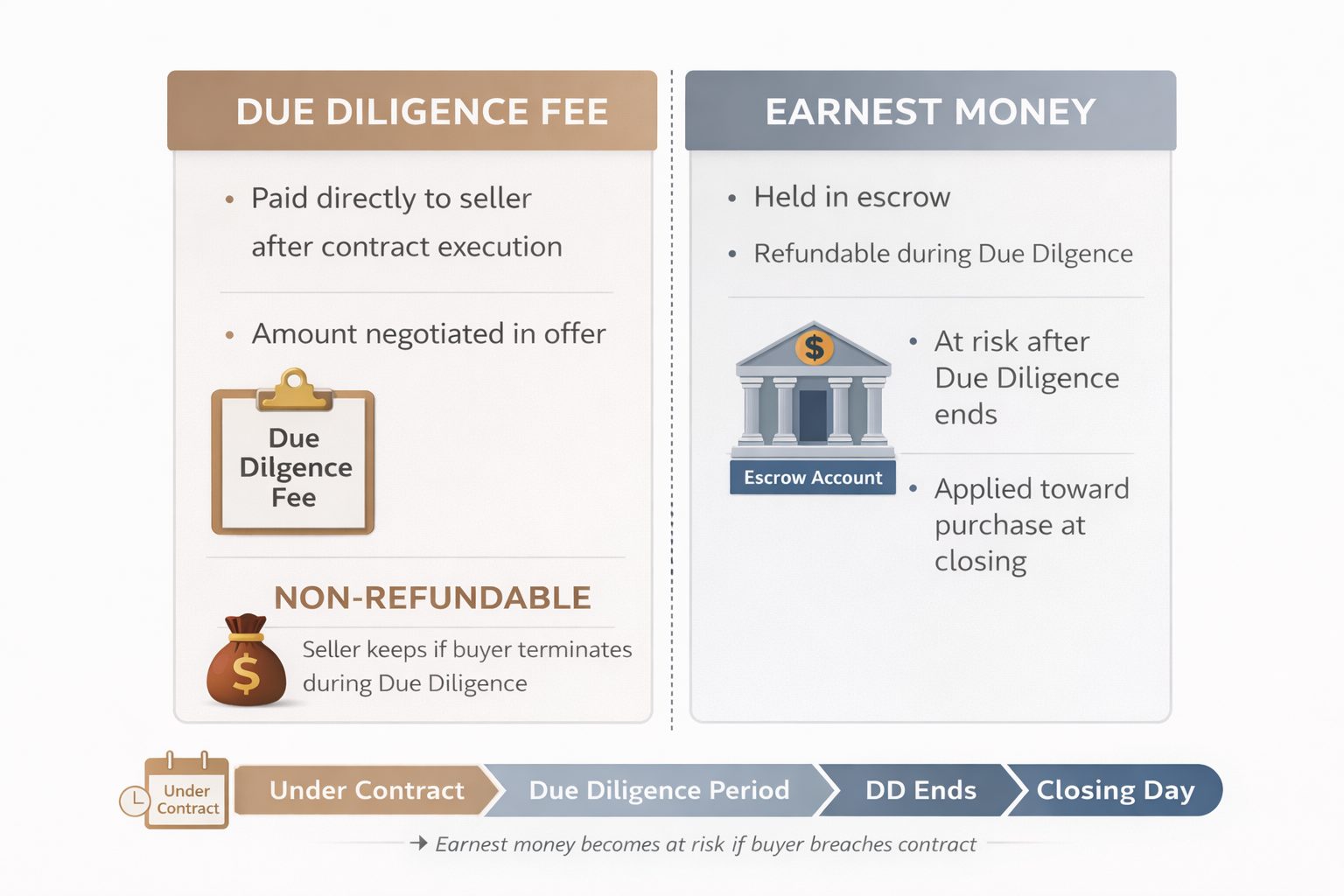
When you accept an offer, the buyer typically pays two deposits:
• A Due Diligence Fee (paid directly to you)
• Earnest Money (held in escrow)
The Due Diligence Fee is non-refundable to the buyer. You receive it shortly after contract execution as compensation for taking your property off the market.
During the Due Diligence period, the buyer may terminate for almost any reason. If they do, you retain the Due Diligence Fee.
Earnest Money, by contrast, is refundable during Due Diligence but becomes exposed once that period expires.
If the buyer fails to close without a contract-permitted reason after Due Diligence ends, you may be entitled to that deposit.
For sellers, two moments matter most:
• Expiration of the Due Diligence period
• Recording of the deed on closing day
Those are your primary leverage milestones.
Agency: Who Represents You — and What That Means
When you list your home in North Carolina, you enter into an agreement with a real estate firm. The individual listing agent represents you as a representative of that firm.
An Exclusive Right to Sell agreement establishes fiduciary duties to you, including loyalty, confidentiality, disclosure, obedience to lawful instruction, accounting, and reasonable skill and care.
Understanding agency is important because it defines who is legally obligated to protect your interests.
Dual Agency
Dual agency occurs when the same firm represents both the buyer and the seller in the same transaction.
The most straightforward example of dual agency is when the same individual agent represents both sides of the transaction.
For example:
If a listing agent also brings the buyer and represents that buyer in the same transaction, that agent becomes a dual agent.
In this situation:
• The agent cannot exclusively advocate for either side
• The agent cannot advise one party on how to gain advantage over the other
• Negotiations must remain neutral
• Confidential information from either side cannot be disclosed
Because the agent owes duties to both parties, their ability to provide strategic advice becomes limited.
Both buyer and seller must consent to dual agency in writing.
Designated Dual Agency
North Carolina also allows designated dual agency.
In this structure:
• The firm represents both buyer and seller
• Two different agents within the same firm are designated to represent each party separately
• Each designated agent owes fiduciary duties to their assigned client
However, the brokerage firm itself is still technically acting as a dual agent.
Designated dual agency allows for separate representation within the same firm, but certain limitations still apply at the firm level.
Sellers should understand these distinctions before agreeing to dual or designated dual agency in the listing agreement.
Agency is not just paperwork — it defines negotiation boundaries and strategic advocacy.
Real Estate Compensation: Strategic, Not Automatic
There is no automatic “6% rule” in North Carolina.
Compensation between the seller and listing firm is negotiated and outlined in the listing agreement.
Additionally, sellers determine whether — and how much — compensation is offered to buyer agents through MLS or contract negotiation.
Compensation influences exposure.
Offering competitive buyer agent compensation can increase showing activity and buyer pool size.
However, compensation should be evaluated in the context of the entire offer structure.
Important: Lenders Do Not Finance Buyer Agent Compensation
Lenders base loans on:
• Purchase price
• Appraised value
• Loan-to-value ratios
They do not lend additional funds specifically for buyer agent compensation outside allowable seller concessions.
If a buyer’s liquidity is heavily committed to their down payment, additional out-of-pocket compensation obligations can create strain.
That strain can surface later as:
• Appraisal gap tension
• Repair negotiation stress
• Cash-to-close shortages
• Increased risk of contract failure
Evaluating buyer liquidity and financing strength matters more than focusing on a single compensation percentage.
Evaluating Offers Beyond Price
In North Carolina, the highest price is not always the strongest offer.
Sellers should evaluate:
• Due Diligence amount
• Earnest Money amount
• Length of Due Diligence
• Financing type
• Appraisal gap coverage
• Buyer liquidity
• Requested concessions
• Compensation structure
Certainty of execution often outweighs headline price.
Offer A vs Offer B
Offer A
• $525,000
• $2,000 Due Diligence
• 30-day Due Diligence
• 5% down
• No appraisal gap
• Seller covering buyer agent compensation
Offer B
• $518,000
• $10,000 Due Diligence
• 14-day Due Diligence
• 20% down
• $10,000 appraisal gap
• Clean compensation structure
Offer B may represent greater certainty of closing despite a lower price.
The strongest offer is the one most likely to close.

Disclosure Requirements: What Sellers Must Complete
North Carolina requires most sellers to complete the Residential Property and Owners’ Association Disclosure Statement.
The disclosure requires sellers to indicate known issues involving:
• Structural components
• Roofing
• Electrical and plumbing
• HVAC
• Water supply and septic
• Drainage
• Flood history
• HOA obligations
• Environmental concerns
Sellers must answer based on actual knowledge.
“No Representation” does not eliminate the obligation to disclose known material defects.
When Disclosure May Not Be Required
Certain transactions may be exempt, including:
• Court-ordered transfers
• Foreclosures
• Estate or trust transfers
• Transfers between co-owners
• Newly constructed homes never occupied
Even in exempt situations, sellers must disclose known material facts affecting value or safety.
Transparency protects you.
The Role of the Closing Attorney
North Carolina is an attorney-closing state.
The closing attorney handles title search, payoff coordination, settlement statements, deed recording, and disbursement.
Keys are released only after the deed records.
Recording finalizes the transaction.
Final Thoughts
Selling a home in North Carolina rewards preparation.
Understanding Due Diligence leverage, agency structure, disclosure obligations, compensation strategy, appraisal risk, and buyer liquidity allows sellers to move from reactive to strategic.
The goal is not simply to accept the highest number.
The goal is to close smoothly, on time, and with confidence.
If you are considering selling in Western North Carolina, we are happy to outline a strategy tailored to your property and today’s market conditions.
Clarity at the beginning creates confidence at closing.

Ready to Make Your Move in Western North Carolina?
We help buyers and sellers across Western North Carolina, including Haywood, Jackson, and Buncombe counties, move forward with clarity and confidence.
Jason Revelia
Call 828-342-1334 |
Email Jason
Shannon Revelia
Call 828-226-6767 |
Email Shannon


