
 Facebook
 X
X
 Pinterest
 Copy Link
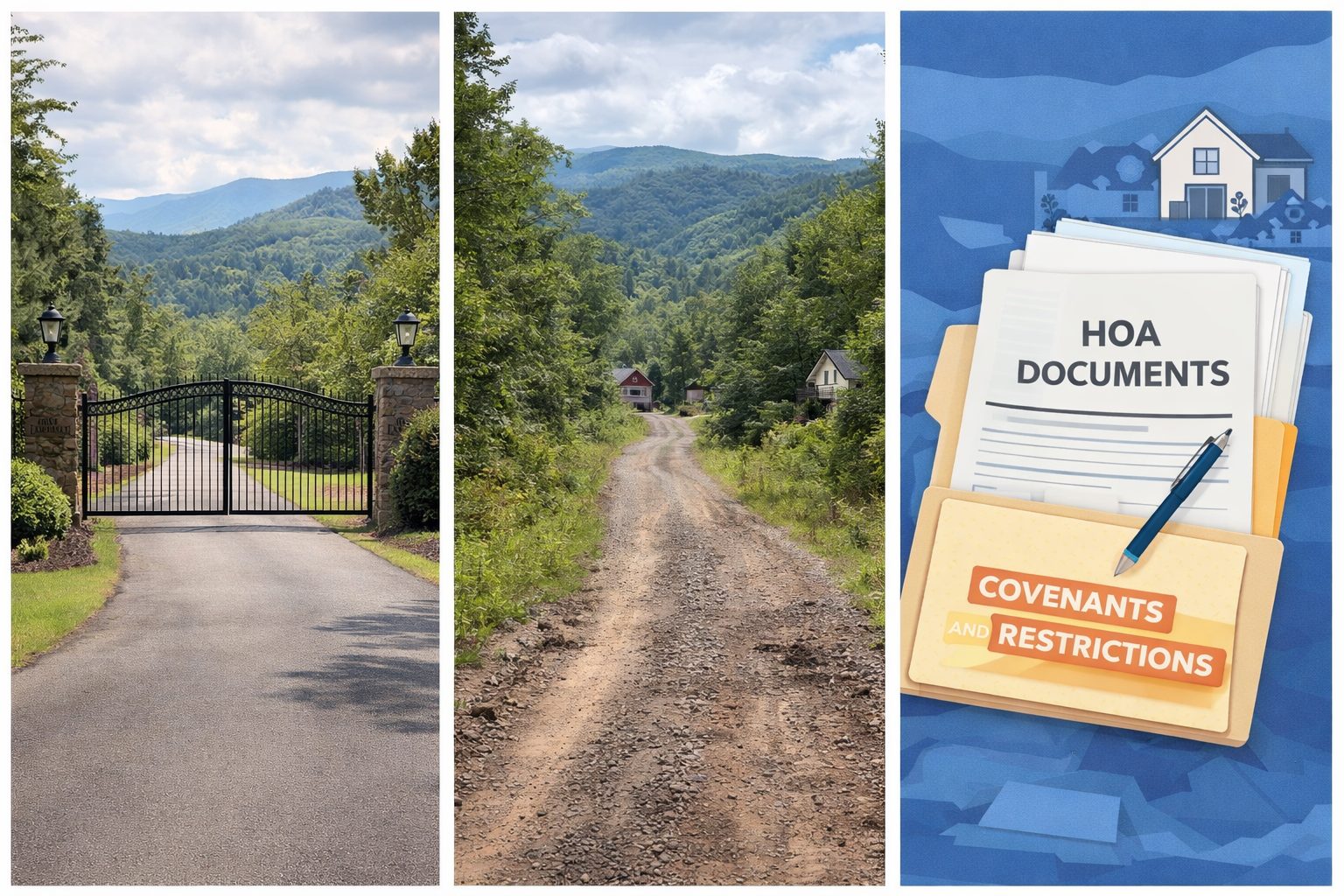
Should You Buy in an HOA or Non-HOA Community in Western North Carolina?
Buying in the Western North Carolina mountains often comes with one important question: should you choose a property in an HOA community or one without an HOA?
For some buyers, the word “HOA” signals restriction. For others, “no HOA” sounds like freedom. In the mountains, the reality is more nuanced. The decision often has less to do with paint colors and more to do with private roads, drainage, shared infrastructure, and long-term property access.
Understanding that distinction early can prevent costly surprises later.
Unlike large metro areas where HOAs are often associated with strict architectural control, many mountain HOAs exist for a much simpler reason, coordination. Road maintenance, shared infrastructure, and long-term property protection are often the primary drivers.
At Revelia Property Solutions, we help buyers evaluate HOA and non-HOA properties with clarity and context. The goal is not to label one as better than the other. The goal is alignment with your priorities and long-term plans.
Let’s break down what HOA and non-HOA living really means in Western North Carolina.
What Is an HOA in Western North Carolina?
An HOA, or Homeowners Association, is a governing body within a subdivision that enforces recorded covenants and collects dues for shared responsibilities.
In Western North Carolina, HOAs are commonly found in:
• Gated mountain communities
• Planned developments
• Newer subdivisions
• Higher elevation communities with private roads
HOAs are governed in North Carolina by the North Carolina Planned Community Act, which outlines how associations operate, collect dues, and enforce restrictions.
Source: North Carolina General Statutes Chapter 47F
https://www.ncleg.gov/EnactedLegislation/Statutes/HTML/ByChapter/Chapter_47F.html
Not all HOAs are the same. Some are highly structured with architectural review boards. Others are minimal, focused primarily on road upkeep and basic covenant enforcement.
Are HOAs Common in the Western North Carolina Mountains?
Yes, but not universal.
Many mountain properties, especially older tracts and rural parcels, have no formal HOA. However, planned communities developed in the past 20 to 30 years often include associations to manage infrastructure.
In counties like Haywood, Jackson, and Buncombe, you will find a mix of:
• Formal HOA communities
• Properties with recorded deed restrictions but no active HOA
• Completely unrestricted land
Understanding which category a property falls into is part of proper due diligence.
What Do HOA Dues Typically Cover in Mountain Communities?
In Western North Carolina, HOA dues often focus on infrastructure rather than amenities.
Common inclusions:
• Private road maintenance
• Snow removal
• Gate maintenance
• Common area upkeep
• Shared well systems in some developments (Well Water in Western NC, What Buyers Should Know)
• Community signage and entrance landscaping
Unlike urban communities, many mountain HOAs do not include pools, gyms, or extensive amenities. Instead, they coordinate maintenance in terrain where shared responsibility is often necessary.
The cost of dues varies widely depending on road length, terrain, and services provided.
Are Mountain HOAs Usually Strict About Architecture?
Some are, but many are not.
Certain gated or high-end communities may have architectural review boards that regulate exterior materials, roof types, or minimum square footage. These rules are typically outlined in recorded covenants.
However, many mountain HOAs are relatively straightforward. Their primary purpose is preserving road quality and preventing uses that significantly impact neighboring properties.
Buyers should review covenants directly rather than assume restrictions based on the presence of an HOA.
Can an HOA Restrict Short-Term Rentals in Western North Carolina?
Yes. Many HOAs in Western North Carolina restrict or regulate short-term rentals.
Restrictions may include:
• Complete prohibition of rentals under a certain duration
• Minimum lease terms
• Permit or registration requirements
• Occupancy limits
It is important to distinguish between county regulations and HOA restrictions. Even if a county allows short-term rentals, an HOA may prohibit them through recorded covenants.
Conversely, a property without an HOA may still have deed restrictions limiting rental use.
Short-term rental restrictions can also influence resale dynamics. In certain mountain markets where vacation rental demand is strong, properties that prohibit STR use may attract a narrower buyer pool. This does not make them less valuable, but it can affect marketing strategy and time on market depending on current demand trends.
Conversely, communities that allow STRs may experience stronger investor interest, which can increase competition but also introduce different neighborhood dynamics. The key is understanding how rental flexibility aligns with your goals and how it may impact future resale positioning. (Is Western North Carolina a Good Short-Term Rental Investment?)
If short-term rental flexibility is important to you, reviewing covenants before making an offer is essential.
What Happens If There Is No HOA?
No HOA means there is no governing association collecting dues or enforcing community-wide rules.
That can offer flexibility, but it also shifts responsibility to individual property owners.
In non-HOA areas, you may encounter:
• Individually maintained driveways
• Informal shared road agreements
• No coordinated snow removal
• Fewer aesthetic restrictions
This does not automatically mean fewer rules. It simply means enforcement mechanisms differ.
Who Maintains Private Roads in Non-HOA Mountain Areas?
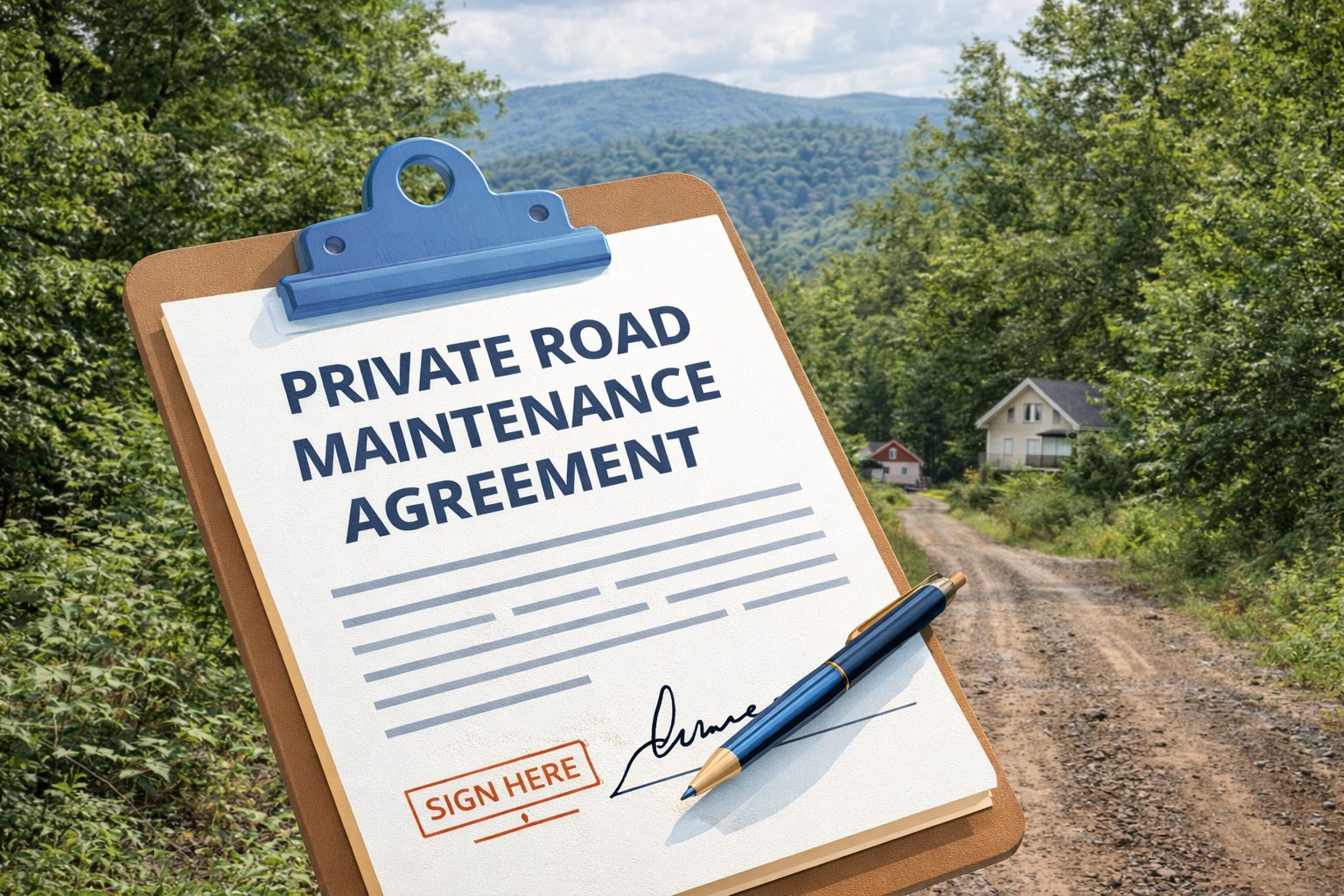
Private road maintenance without an HOA typically depends on recorded easement agreements or informal neighbor cooperation.
In some cases, there may be a Road Maintenance Agreement recorded with the property deed outlining cost-sharing responsibilities. In others, arrangements may be informal.
In mountain terrain, road grading, gravel replenishment, culvert repair, and drainage control are critical. Without coordinated maintenance, road quality can decline over time.
Understanding who is financially responsible for road upkeep is one of the most important due diligence steps in non-HOA purchases.
Can There Still Be Restrictions Without an HOA?
Yes. Recorded deed restrictions can exist even when no active HOA is present.
These restrictions may address:
• Minimum home size
• Mobile home limitations
• Commercial use restrictions
• Livestock allowances
• Subdivision limitations
Deed restrictions are attached to the property title and remain enforceable even if no association actively manages them.
Buyers should review title documents carefully.
Are Shared Wells or Septic Systems More Common in HOA Communities?
Shared infrastructure is more commonly coordinated within HOA communities, but it can exist outside them as well.
Some developments utilize shared wells or community water systems managed through the association. Others may rely on individual private wells and septic systems.
In non-HOA areas, shared wells are typically governed by recorded shared well agreements rather than association oversight.
Understanding maintenance responsibility and cost allocation is critical in either scenario.
How Do HOAs Affect Property Value in Western North Carolina?
HOAs can influence property value depending on buyer preference and community maintenance standards.
Well-maintained private roads and coordinated infrastructure often preserve access quality and long-term usability, which can positively influence marketability.
Conversely, overly restrictive covenants may narrow the buyer pool in certain segments.
In Western North Carolina, value impact is highly location-specific. Clarity and transparency matter more than the HOA label itself.
What Should Buyers Review During Due Diligence?
Buyers should review:
• Recorded covenants and restrictions
• HOA bylaws and meeting minutes
• Current dues and assessment history
• Road maintenance agreements
• Shared well or septic agreements
• Short-term rental rules
• Financial health of the association
Due diligence is about understanding structure, not reacting to assumptions.
At Revelia Property Solutions, we guide clients through these documents carefully so expectations align with reality.
Conclusion
HOA and non-HOA communities in Western North Carolina each come with advantages and responsibilities.
In the mountains, the conversation is often about infrastructure, not aesthetics. Road maintenance, snow removal, drainage, and shared systems matter just as much as flexibility.
The right choice depends on your goals, whether that is long-term residence, second-home ownership, rental use, or privacy.
Before you make an offer in a mountain subdivision or rural tract, let’s review the governing documents and infrastructure responsibilities together.
Clear understanding leads to confident ownership.
Frequently Asked Questions
Q: Are HOA fees expensive in Western North Carolina?
A: Fees vary widely depending on road length, services provided, and community size. Some mountain HOAs have modest annual dues focused solely on road maintenance.
Q: Can you negotiate HOA fees?
A: HOA dues are set by the association and generally not negotiable individually. However, buyers can factor dues into overall budgeting and negotiations.
Q: Is buying without an HOA risky in the mountains?
A: Not necessarily. It simply requires understanding road access, maintenance responsibilities, and any recorded restrictions.
Q: Do all mountain HOAs restrict short-term rentals?
A: No. Policies vary significantly. Reviewing covenants directly is the only reliable way to confirm rental allowances.
Q: Who pays if a private mountain road washes out?
A: Responsibility depends on whether the road is HOA-managed, governed by a maintenance agreement, or individually maintained. This should be clarified before closing.

Ready to Make Your Move in Western North Carolina?
We help buyers and sellers across Western North Carolina, including Haywood, Jackson, and Buncombe counties, move forward with clarity and confidence.
Jason Revelia
Call 828-342-1334 |
Email Jason
Shannon Revelia
Call 828-226-6767 |
Email Shannon


